Fire Cupping vs Dry Cupping
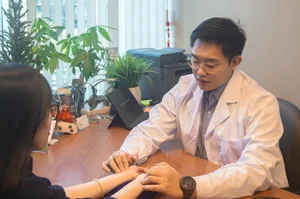
Fire cupping and dry (pump) cupping both use suction to lift tissue and improve circulation; the difference is how the suction is created, not how strong the treatment is. Neil Dou, R.TCMP, trained in fire cupping at Kwantlen Polytechnic University and uses both methods with patients across Surrey, South Surrey, and Langley, choosing the method that fits each patient's presentation and comfort level.
Most people encounter fire cupping through a photo: circular marks across a celebrity's back, or a clip from a documentary about ancient medicine. They arrive at the clinic having already decided it looks intense. What they rarely know is why fire is used, whether it changes anything clinically, or why a practitioner might choose one method over the other in the same session.
Both methods use suction. That is where the comparison starts.
Which Should You Choose?
If you are trying to decide before your session, the short version:
Choose fire cupping if...
You have had cupping before
You have chronic or long-standing tension
You want moving cupping along the back
You prefer a faster draw
You are comfortable with residual warmth from glass
Choose pump cupping if...
This is your first time
You are uncertain about pressure tolerance
You have sensitive or thin skin
You want more control during the session
You prefer no heat element at all
If you are unsure, Neil will assess at the start of the appointment and recommend the appropriate method based on your presentation that day. You can also raise a preference before treatment begins.
What Both Methods Have in Common
A cup is placed on the skin, pressure inside drops below atmospheric, and the tissue lifts upward. That lift creates increased local blood flow, loosens superficial fascial adhesions, and signals the nervous system in ways that shift pain perception and muscle tone.
The suction is the treatment. Fire and pump are two ways to create it.
What Fire Cupping Actually Is
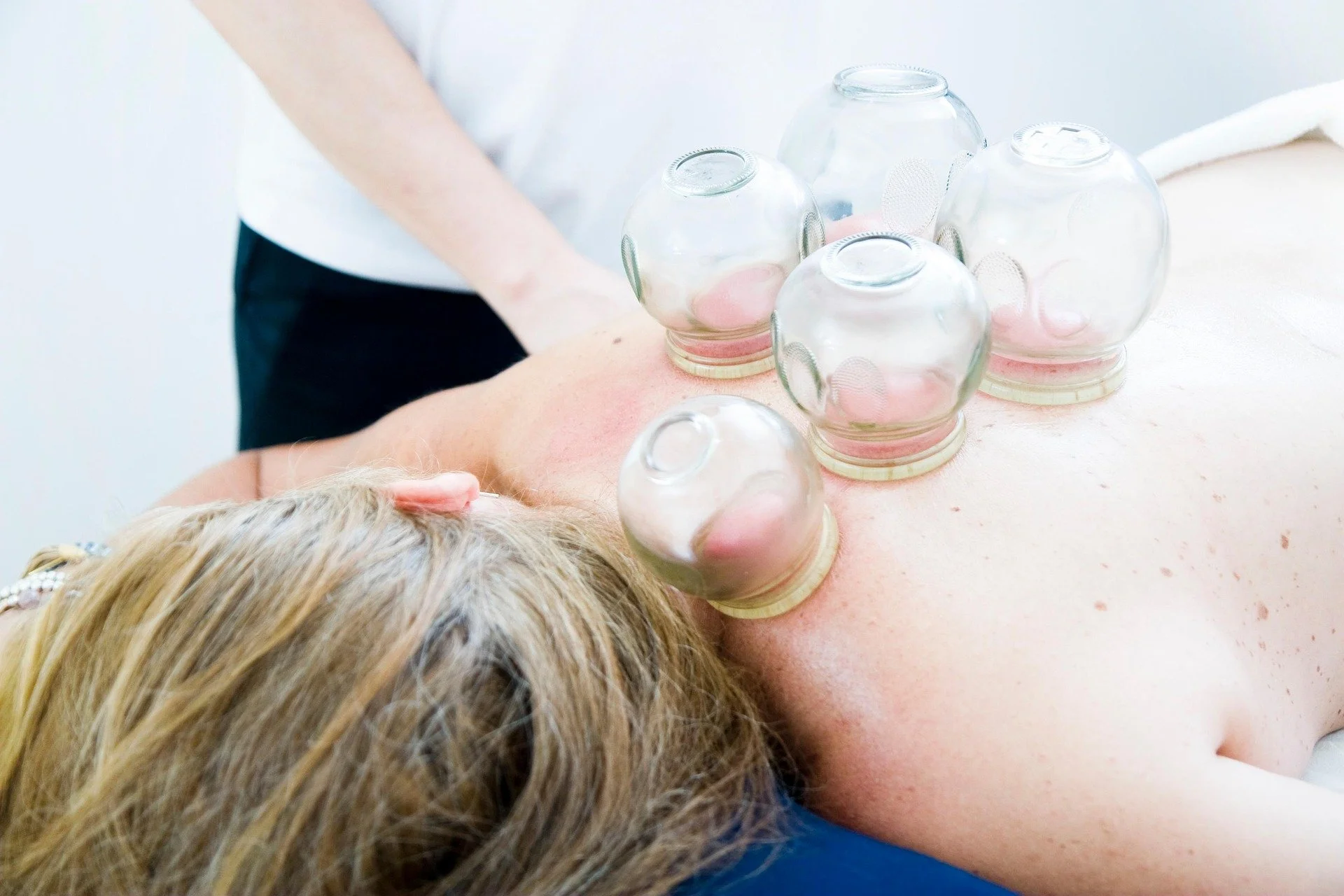
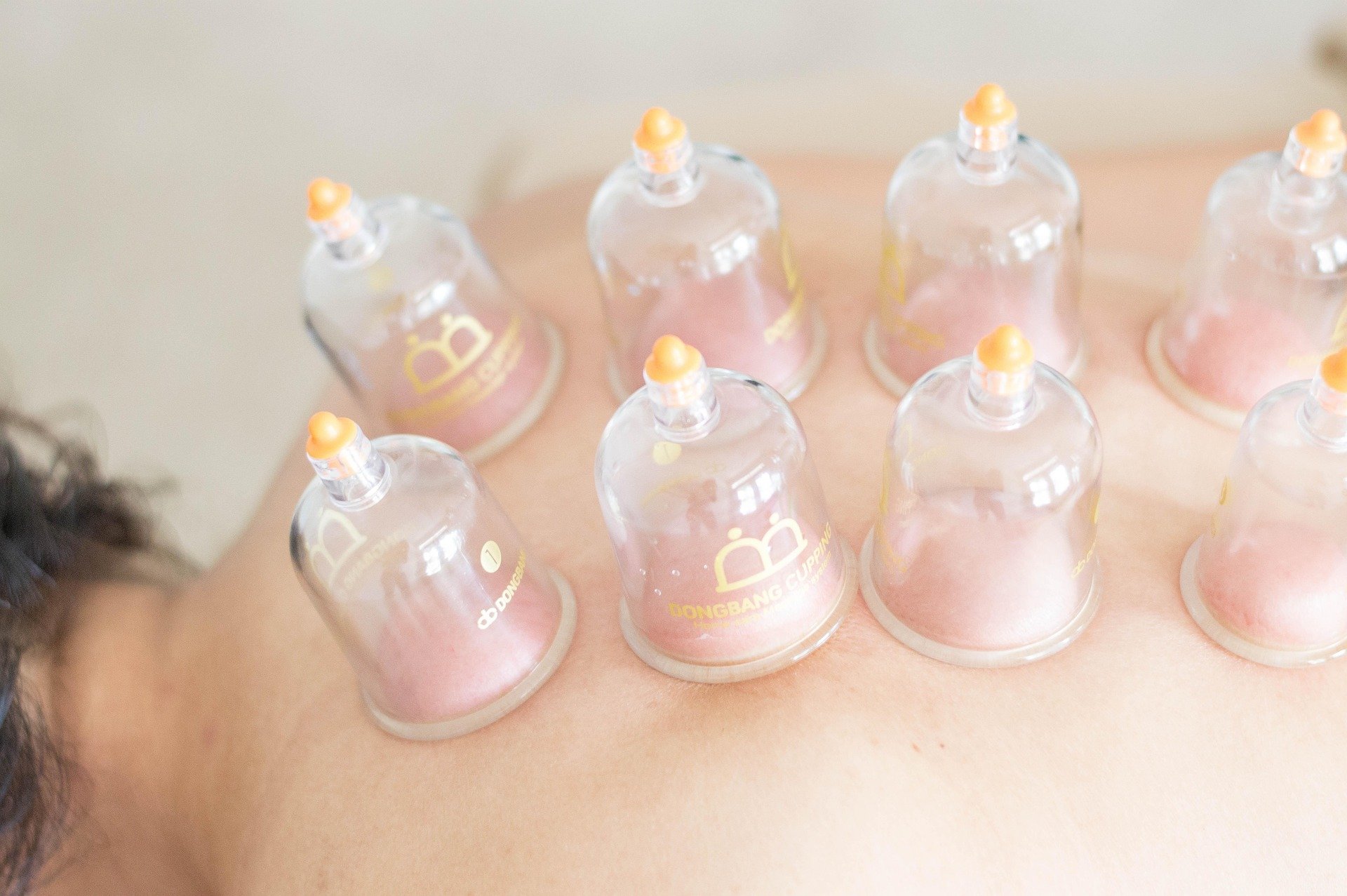
Fire cupping uses a flame to briefly heat the inside of a glass cup. The heat consumes the oxygen inside, and when the flame is removed and the cup is placed on the skin, the cooling air contracts and creates negative pressure. The fire never touches the skin.
The cups are glass. Glass produces a firm, immediate draw and cannot be adjusted once placed, which means the practitioner has to calibrate suction before application by controlling how long the flame is held inside the cup.
Neil trained in fire cupping as part of his TCM studies at Kwantlen Polytechnic University and has used it clinically for years. In practice, the skill is in the cup placement and the draw level. The fire is a means to an end.
What Dry Cupping Is
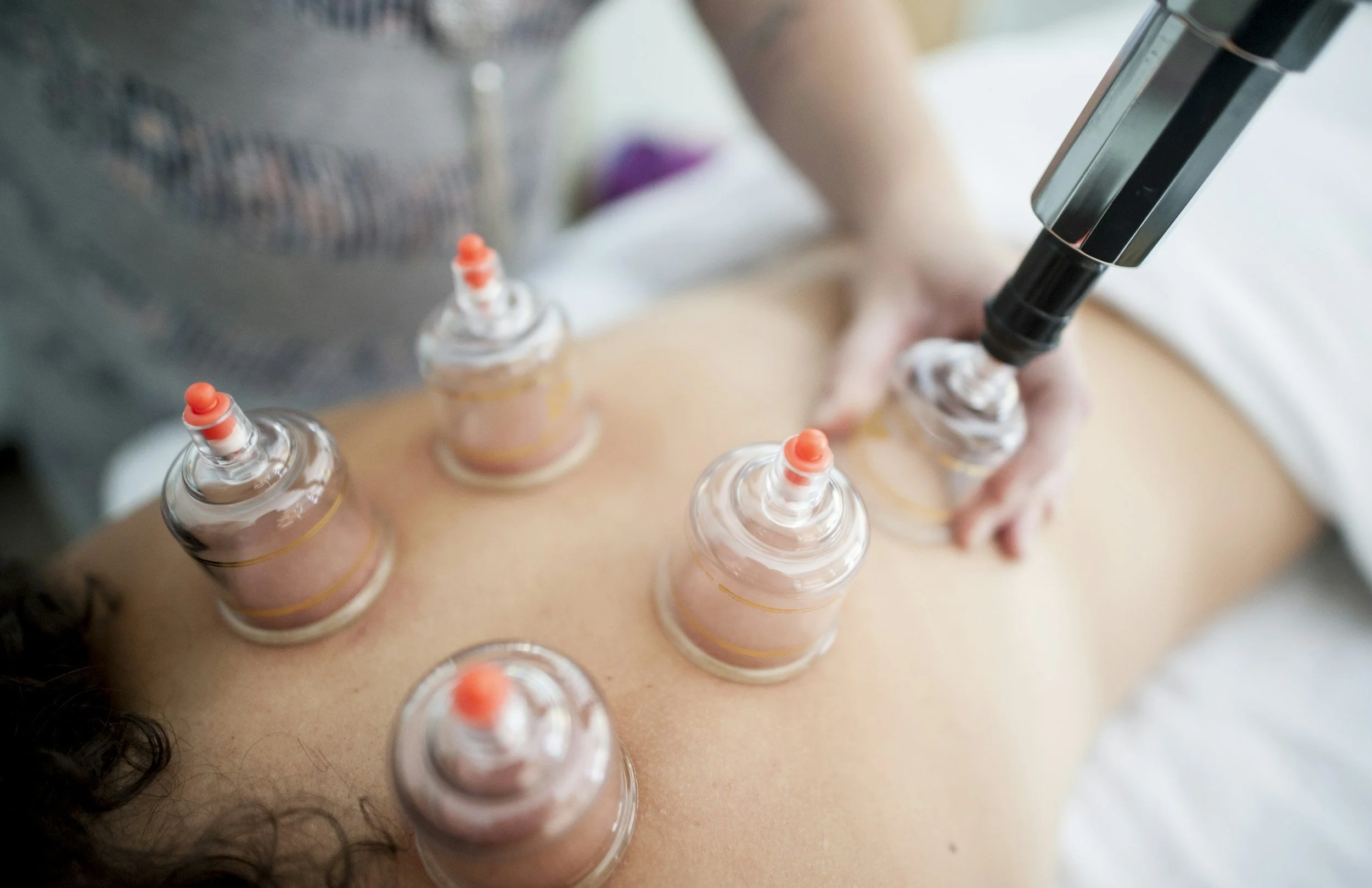
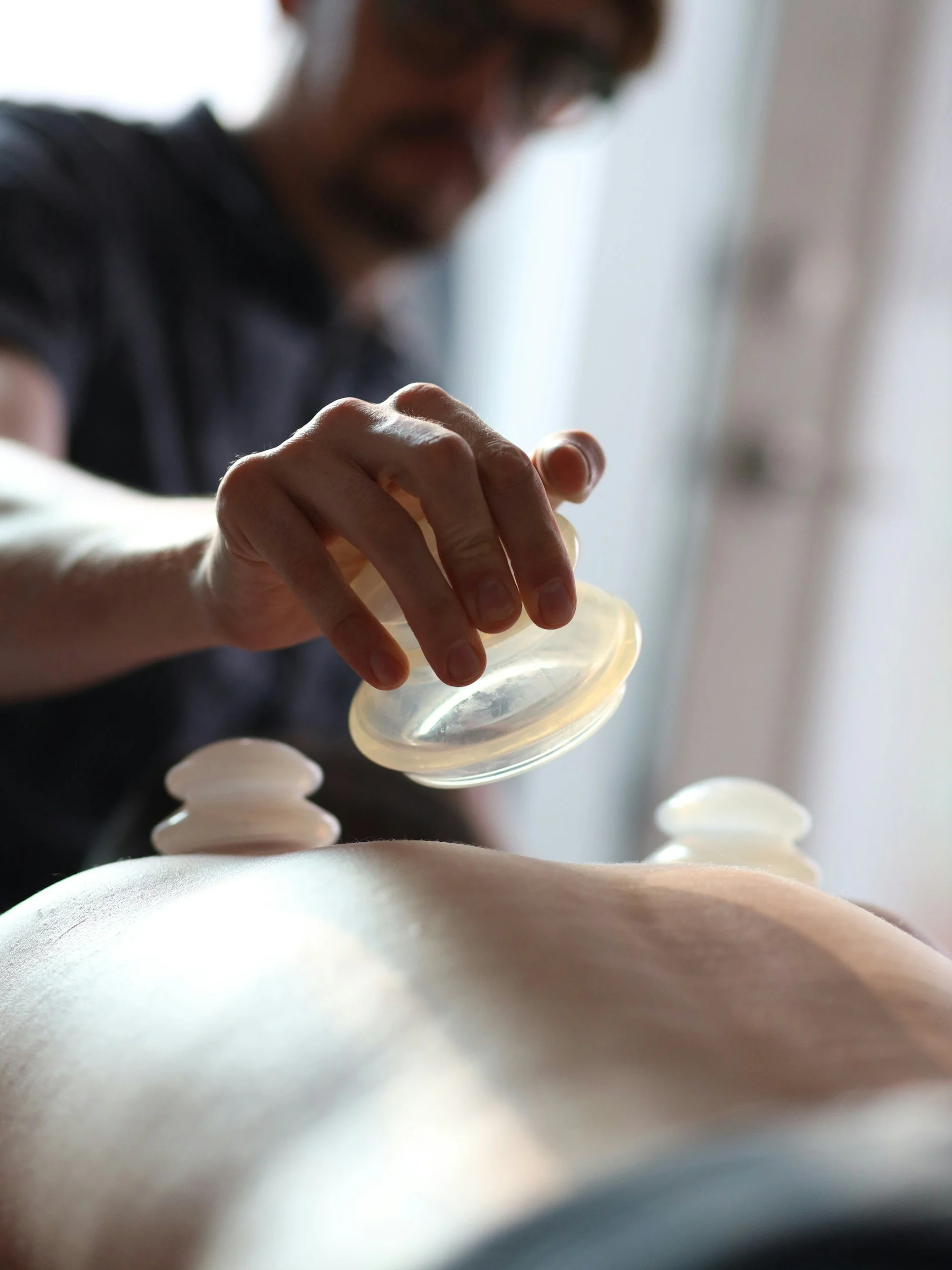
Dry cupping uses a hand pump or self-sealing silicone cups to create suction without heat. The key difference mechanically: suction level can be dialled in and adjusted after placement. If the draw is too strong or the patient finds it uncomfortable, pressure can be released without removing the cup.
The term "dry cupping" distinguishes it from wet cupping (hijama), where small incisions are made and blood is drawn. In most clinical TCM settings, dry cupping means fire or pump with no skin-breaking. The terminology is not always consistent across practitioners.
Differences in Sensation
Fire cupping feels more immediate. The suction draws fast, and there is a brief warmth from the glass itself, not from the flame, but from residual heat in the cup. Some patients describe a firm pulling sensation with added warmth that they find either reassuring or slightly startling depending on what they were expecting.
Pump cupping feels more gradual. The practitioner builds suction in increments and patients can give feedback during application. For people who are new to cupping or uncertain about how much pressure they want, this is usually the better starting point.
Neither is more effective at the suction level. The tissue does not know whether the negative pressure arrived via flame or pump. Draw level, cup size, duration, and placement are what matter.
The Marks: What They Mean and How Long They Last
Cupping marks are not bruises. A bruise results from impact trauma breaking capillaries. Cupping marks result from negative pressure drawing blood and interstitial fluid toward the surface. Colour and duration tell you something about that tissue. Darker marks in areas of chronic tightness are common on the first session. As circulation improves, they tend to lighten and fade faster. For a detailed explanation, see what cupping marks actually mean.
Fire cupping and dry cupping produce marks of equivalent intensity at equivalent suction levels. If marks appear darker after fire cupping than after pump cupping, the most likely explanation is that suction level or duration differed, not the method.
When to Choose Your Cupping Method
First-time patient (high sensitivity): Choose Pump Cupping for real-time suction adjustments.
Chronic tension (experienced patient): Choose Fire Cupping for a firm, fast draw and smooth gliding.
Moving Cupping: Choose Fire Cupping to ensure glass slides consistently on oiled skin.
Patient concerned about heat: Choose Pump Cupping as it contains no heat component.
Thin or sensitive skin: Choose Pump Cupping to apply lighter suction accurately.
Combined with acupuncture: Choose Either based on practitioner discretion for the specific area.
Moving Cupping Insight
Moving cupping, where the cup slides along the skin while suction is maintained, is significantly easier with glass fire cups on oiled skin. Glass provides better feedback and moves with less friction.
What Most People Get Wrong
The most common assumption: fire cupping is the strong option and pump cupping is the gentle option. This is not accurate. Suction level determines intensity. A pump applied at maximum draw is not gentler than fire cupping at moderate draw. The method of creating suction and the level of suction are two separate variables.
The second assumption is that the fire carries some therapeutic benefit of its own. It does not. TCM tradition associates the warming quality with certain clinical presentations, and that framing has value in how treatment is explained. The physiological driver is the suction.
Safety Considerations
Fire cupping is safe when performed by a trained practitioner. The fire is controlled and the risk of burn is low when the procedure is done correctly. The glass must not be overheated, and the patient should not move suddenly during cup placement.
Contraindications for cupping, regardless of method:
Broken or irritated skin
Blood clotting disorders
Active fever
Pregnancy (over the lower back and abdomen)
Areas over bony prominences without sufficient tissue depth
If any of these apply, tell Neil before the session. Cupping can often still be used in other areas or with modifications.
What to Expect: Sessions and Results
A typical cupping session lasts 20 to 40 minutes, often as part of a broader TCM appointment that may also include acupuncture. Cups are usually retained for five to fifteen minutes, depending on the presentation and the patient's response.
For acute muscle tension or a recent injury, some patients notice significant change after one session. For chronic or long-standing tension patterns, multiple sessions are usually needed before improvement holds.
A realistic expectation for most chronic presentations: noticeable change within two to four sessions, with the first appointment establishing how tissue responds and what method is appropriate going forward. If nothing has shifted by session three, the approach is reassessed.
Cupping does not cure the underlying cause of tension. It supports the conditions for recovery. For presentations involving load, posture, or movement patterns, it works best alongside whatever is addressing those factors.
Not sure whether cupping fits your situation? Neil sees patients in Surrey, South Surrey, and Langley. The first step is a consultation, where he assesses your presentation and tells you directly whether treatment is likely to help before you commit to a course of sessions.
How Neil Approaches Cupping in Surrey and Greater Vancouver
Neil uses both methods. For new patients, pump cupping is usually the starting point. It allows accurate assessment of how tissue responds before deciding whether fire cupping makes sense. For patients with established chronic tension patterns, fire cupping with glass cups is often more practical, particularly when moving cupping along the back or shoulders.
Cupping is offered as part of TCM cupping therapy and is often combined with acupuncture in the same appointment. If you are comparing the two treatments rather than the two cupping methods, the cupping vs acupuncture comparison covers that directly.
Neil is a Registered Acupuncturist with the CCHPBC, holds a four-year advanced TCM diploma from Kwantlen Polytechnic University, and a Bachelor's in Psychology from UBC. He serves as Vice President of the ATCMA and has treated over 7,000 cases across Canada and China. More detail on his training is on the about page.
Continuing with a method that is not producing results after several sessions is not the standard here. If the presentation calls for a different approach, that conversation happens.
Who Cupping Is and Is Not For
Consider booking if:
You have specific areas of muscle tension, tightness, or restricted movement that have not responded to other approaches
You have had cupping before and want to continue treatment
You want a direct clinical opinion on whether cupping fits your current presentation
Wait or discuss with Neil first if:
You have broken skin, an active skin condition, or a fever
You are in the first trimester of pregnancy
You have a clotting disorder or are on blood-thinning medication without medical clearance
Neil also works with patients managing chronic pain and sports injuries, where cupping is often part of a broader treatment plan alongside acupuncture or other TCM approaches.
FAQ
-
Fire cupping uses a flame to create suction inside a glass cup. Dry cupping uses a hand pump or silicone cups to create suction without heat. Both produce the same therapeutic effect. The difference is in technique, adjustability, and the type of cup used.
-
Not inherently. Discomfort with cupping is determined by suction level, not by the method used to create it. The draw level is the variable that matters.
-
Typically three to seven days, though this varies by individual and tissue state. Marks fade faster as sessions progress and circulation in the area improves.
-
Marks from both methods last a similar amount of time when suction levels are equivalent. Duration is not determined by the method of creating suction.
-
Yes. If you have a preference or a concern about either method, raise it before the session. Neil will explain what fits your situation and accommodate your preference where clinically appropriate.
-
Yes, and they are often used together in the same session. Acupuncture addresses specific points, while cupping works on broader areas of tissue. The combination is common in TCM practice and often more effective than either approach alone for musculoskeletal presentations.
-
For acute presentations, one to two sessions can produce noticeable change. For chronic or long-standing tension, expect two to four sessions before improvement holds. Neil will give you a direct assessment at the end of the first appointment.
-
For presentations involving muscular tension, restricted movement, or stress-related physical symptoms, the evidence supports it as a useful approach when applied correctly. It is not appropriate for every presentation. The consultation is where that determination is made honestly.
Book a Cupping Therapy Assessment
If you have specific areas of tension, restricted movement, or are simply curious whether cupping fits your situation, the first step is a consultation. Neil will assess your presentation, explain which method is appropriate, and give you a direct answer about whether treatment makes sense before you commit to a course of sessions.
Neil sees patients at three locations across Greater Vancouver: Surrey, South Surrey, and Langley. You can reach him by phone or SMS at (604) 721-7984 or by email at tcmwithneil@gmail.com. For a full overview of acupuncture and TCM services in Greater Vancouver, see the services page.

Neil Dou, R.TCMP & R.Ac
Experienced & Trusted TCM Care
Registered Traditional Chinese Medicine Practitioner & Registered Acupuncturist in BC with extensive clinical experience in both China and Canada.
Serving Richmond, Surrey & Greater Vancouver
Provides personalized acupuncture treatments and home visits across Richmond, Surrey, and Burnaby, recognized for effective care and positive patient feedback.
Proven Results With a Holistic Approach
With over 7,000 successful treatments, care focuses on pain relief, internal medicine, and long term healing through a holistic approach that combines acupuncture, food therapy, cupping, gua sha, and lifestyle guidance.