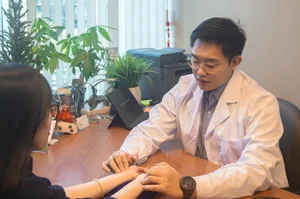
Acupuncture for Lower Back Pain
Acupuncture treats lower back pain most effectively when the driver is muscular or nerve-related rather than structural, typically producing measurable change within 2 to 5 sessions for acute strain or sciatica. Neil Dou, R.Ac, offers ICBC direct billing for post-accident cases and assesses which structure is driving the pain before treatment begins.Lower back pain is one of the most common presentations in Neil's Surrey practice. It is also one of the most treatable. The key is identifying the driver correctly and starting treatment before the pattern becomes entrenched.
This page is for people who have had back pain for more than two weeks, have been through a motor vehicle accident, or keep cycling through flares without resolution. If that is your situation, the information below will tell you whether acupuncture is appropriate for your presentation, what to expect from treatment, and how Neil approaches these cases differently from standard physiotherapy or chiropractic care.
If your pain started in the last 48 hours and is already improving, give it a few more days before booking anything.
Seek Assessment Immediately If
Your back pain started after a motor vehicle accident
You have radiating pain down one or both legs below the knee
You have lost bladder or bowel control alongside back pain (this requires emergency care)
Your pain is severe and was triggered by a specific movement or lift
You have been in constant pain for more than two weeks without reduction
What Most People Get Wrong About Back Pain Treatment
They treat it like it has one cause. Lower back pain is a symptom, not a diagnosis. Muscle strain, disc irritation, sacroiliac joint dysfunction, and sciatic nerve involvement all present as "back pain" but require different approaches. Starting treatment before understanding which structure is driving the pain wastes sessions and delays resolution.
They wait for it to pass. Acute low back pain can resolve on its own within 6–12 weeks. Cases left untreated within that window often develop secondary muscle guarding and compensatory movement patterns that take significantly longer to address. Waiting is not always neutral.
They assume acupuncture is a last resort. For muscular and nerve-driven back pain specifically, acupuncture is more effective early in the presentation, when neurological sensitization is fresh and tissue has not yet locked into compensation. Patients with chronic back pain of two or more years respond, but more slowly and less completely than those who come in within the first four to six weeks.
They conflate "no imaging findings" with "no real pain." Some of the most debilitating lower back presentations involve minimal or no structural findings on MRI. Disc degeneration visible on imaging is also found in people with zero pain. Image findings and symptom severity correlate poorly across many back pain cases. The pain is real. The cause is often neuromuscular rather than structural.

What Acupuncture Actually Does for Back Pain
Acupuncture produces three effects relevant to lower back pain.
Nerve gate modulation. Fine needles stimulate A-delta and C nerve fibres, activating the gate control mechanism in the dorsal horn of the spinal cord. In practical terms, this interrupts pain signal transmission before it reaches the brain, reducing perceived pain intensity. For sciatic-driven pain, this is one of the mechanisms behind the reduction in leg referral during and after treatment.
Muscle tension release. Dry needling of trigger points within the erector spinae, quadratus lumborum, and gluteal muscles produces a local twitch response that resets the motor end plate. This is a mechanical change. Patients with paraspinal muscle spasm, the kind that locks the back and makes every movement sharp, often see significant relief within two to three sessions targeting those specific muscles.
Inflammation regulation. Needling stimulates local release of adenosine, which has anti-inflammatory properties at the tissue level. For disc-adjacent inflammation or sacroiliac joint irritation, this produces a measurable reduction in local inflammatory load over a course of treatment.
None of these mechanisms replaces imaging for structural diagnosis. Acupuncture is a physiological intervention, not a diagnostic tool. If ruling out disc herniation or fracture is clinically indicated, that requires imaging.
Types of Back Pain Acupuncture Helps With
Muscular and myofascial pain. This is where acupuncture performs most consistently. Paraspinal muscle tension, quadratus lumborum tightness, and trigger-point-driven pain respond well across most presentations. These are extremely common in Surrey and Langley, where long commutes, desk-based work, and extended driving create persistent postural load on the lumbar spine.
Sciatic-driven pain. Acupuncture does not fix a herniated disc. When the sciatic nerve is irritated and the surrounding musculature is in spasm compounding the irritation, acupuncture addresses the neuromuscular component effectively. Many patients with mild-to-moderate disc-related sciatica see significant leg pain reduction without any change to the disc pathology itself, because spasm and nerve sensitization were a large part of what they were feeling.
Postural and repetitive strain pain. Accumulated load from sustained postures (construction work, extended driving, childcare, anything that keeps the lumbar spine in one position for hours) creates a pattern of chronic low-grade tension with periodic acute flares. Acupuncture combined with guidance on load management addresses the physiological component of this well.
Post-accident back pain. ICBC-covered cases make up a significant portion of clinical presentations. Whiplash-associated injuries, lumbar strain from impact, and the neurological sensitization that follows an accident all respond to acupuncture. Early intervention is the advantage: sessions covered through ICBC direct billing mean treatment begins before the pain pattern becomes habitual.
For cases where a single acute episode has become a persistent pattern over months, this overlaps with broader chronic pain management.

When Acupuncture Is Not the Right First Step
If back pain is accompanied by any of the following, imaging or specialist assessment is needed before acupuncture:
Bladder or bowel changes (emergency assessment required)
Night pain that consistently wakes you from sleep
Pain with fever or systemic symptoms
A history of osteoporosis, cancer, or recent significant trauma
Major weakness in the legs (not pain-limited movement, but actual strength loss)
For confirmed significant disc herniation causing severe neurological deficit, acupuncture is an adjunct, not a primary treatment. It works alongside medical management in these cases, not as a substitute.
Mild-to-moderate disc findings with nerve irritation but intact function? Acupuncture is appropriate and commonly effective. The distinction is discussed directly at assessment.
Acupuncture vs. Physiotherapy vs. Waiting: How to Choose
This is a question worth answering directly, because most people experiencing back pain are choosing between these three options.
Physiotherapy works well for structural rehabilitation: strength deficits, mobility restriction, post-surgical recovery, and cases where movement retraining is the primary need. If your back pain has a clear postural or movement-pattern cause and you are otherwise functional, physiotherapy is often the right first step. Many of the clinics Neil works from (BreakThru Kinetics in Surrey, Beyond Physiotherapy in South Surrey and Langley) offer both, which means the assessment can determine which direction makes more sense rather than forcing a choice upfront.
Acupuncture works better for presentations where the primary driver is neuromuscular: nerve irritation, trigger-point-driven spasm, post-accident sensitization, or pain that has persisted despite physiotherapy. It also reaches tissue depth that manual therapy cannot, particularly in the deep lumbar musculature and along the sciatic pathway.
Waiting is appropriate for very acute presentations (under 72 hours) that are already tracking toward improvement. It is not appropriate for pain lasting more than two weeks, pain following a motor vehicle accident, or pain that keeps recurring on the same pattern. In those cases, waiting typically extends the total episode length and allows compensation patterns to develop.
In practice, the most common presentation Neil sees is someone who has already done physio, found partial improvement, and is still dealing with residual nerve irritation or deep muscle tension that manual therapy did not reach. Acupuncture in that context is not a competitor to what came before. It addresses what is left.

ICBC Coverage for Back Pain: What to Know
If lower back pain started after a motor vehicle accident in British Columbia, ICBC covers acupuncture through their pre-approved treatment structure. Neil offers ICBC direct billing as part of the ICBC Recovery Network, which means no out-of-pocket payment at the time of treatment.
ICBC pre-approves 12 acupuncture sessions following an accident. Most acute whiplash-associated and lumbar strain cases see substantial improvement within that window when treatment begins early, within the first few weeks of the accident rather than after the claim is fully processed.
For broader context on how complex and persistent pain presentations are approached, including post-accident cases, see the chronic pain service page.
Treatment Timeline and Realistic Expectations
There is no universal number. These are the patterns observed across lower back pain presentations:
Acute muscular strain
Sessions to measurable change: 2–4
Full course: 6–8
Sciatic irritation (without major disc involvement)
Sessions to measurable change: 3–5
Full course: 8–12
Chronic postural pain (years of accumulation)
Sessions to measurable change: 4–6
Full course: 10–16
Post-accident lumbar strain (ICBC)
Sessions to measurable change: 3–5
Full course: 8–12 (within pre-approved 12)
Understanding Progress
Measurable change: Defined as reduced pain intensity, better range of motion, or longer periods of comfort between pain spikes.
Assessment: Neil evaluates progress at session three.
Adjustment: If a presentation is not tracking toward resolution, the approach is adjusted.
Standard of care: Continuing the same treatment without progress is not the standard.

Decision Framework: Act Now or Wait?
Act Now If
Pain has lasted more than 2 weeks
Pain radiates into the leg
You have been through a motor vehicle accident
Pain is disrupting sleep or work
This is a recurring pattern that keeps returning
You Can Wait If
Pain started in the last 48 hours after a clear trigger
Pain is localized and mild
Movement has already started improving on its own
You have a confirmed structural issue requiring surgical consult
Pain is at 3/10 or less and manageable without medication
If you are in the left column, waiting rarely saves time. It typically extends the total duration of the episode and, in some cases, adds compensation patterns on top of the original injury.
How Neil Approaches Lower Back Pain
Neil Dou is a Registered Acupuncturist (R.Ac) registered with the College of Complementary Health Professionals of BC. He completed his acupuncture training through the four-year advanced program at Kwantlen Polytechnic University and has treated over 7,000 cases across China and Canada, with chronic pain as a primary clinical focus.
Most practitioners at that case volume develop pattern recognition that changes how back pain is assessed. A presentation that looks like straightforward lumbar strain often has a sciatic component, a hip flexor contribution, or a postural driver that needs addressing alongside the primary complaint. Missing that on assessment means treating the symptom rather than the cause.
Neil holds advanced training in Fu's Subcutaneous Needling (FSN), a technique with particular application to musculoskeletal and nerve-driven pain presentations, and has completed training in Yellow Emperor Style Acupuncture and One Needle Acupuncture under Professor Shuzhong Gao. He currently teaches TCM coursework at the Canadian College of Naturopathic Medicine and serves as Vice President of the ATCMA.
The initial assessment includes a movement screen, palpation of the lumbar spine and surrounding musculature, and a case history covering pain pattern, onset, and any prior imaging. Neil identifies the primary driver before any needling begins.
For muscular presentations, treatment targets the affected tissues directly (erector spinae, quadratus lumborum, gluteal muscles, and in sciatic cases the piriformis) using a combination of local and distal points matched to the meridian pattern involved. For nerve-driven pain, points along the Bladder and Gallbladder meridians corresponding to the sciatic pathway are included.
Neil also discusses load factors: the postural and activity patterns likely maintaining the problem between sessions. Acupuncture speeds recovery. It does not undo eight hours of poorly supported sitting if that pattern continues unchanged.
If back pain is accompanied by shoulder or upper back tension (common in desk workers and post-accident cases), the article on acupressure for shoulder and back pain covers approaches that can be applied between sessions. For context on how acupuncture compares to cupping for musculoskeletal pain, see cupping therapy vs. acupuncture.

FAQ
-
Acupuncture produces measurable physiological effects relevant to lower back pain, including nerve gate modulation, trigger point release, and local anti-inflammatory activity via adenosine. These mechanisms have documented physiological pathways. Systematic reviews have found acupuncture significantly more effective than sham and no-treatment controls for chronic lower back pain. The effect is real. The magnitude varies by presentation.
-
For acute muscular back pain, most patients see clear improvement within two to four sessions. Sciatic-driven pain and chronic presentations typically need eight to twelve sessions for sustained change. Progress is assessed at session three, and you receive a direct answer on trajectory at that point.
-
Yes. ICBC pre-approves 12 acupuncture sessions following a motor vehicle accident. Neil offers ICBC direct billing, meaning no out-of-pocket payment is required at the time of treatment. Have your claim number ready when booking.
-
Acupuncture uses fine needles to stimulate points at depth, producing mechanical and neurological effects at tissue level. Acupressure uses sustained manual pressure on the same points and is useful for maintenance between sessions, but does not reach the same tissue depth or produce the same trigger point release. For acute or chronic lower back pain, acupuncture is the more effective primary treatment. More on the differences in the article on acupressure for shoulder and back pain relief.
-
Needle insertion produces a brief sensation. At trigger point sites, particularly in the quadratus lumborum and paraspinal muscles, a dull ache or brief muscle twitch is common as the tissue releases. That response is the mechanism working. Most patients describe sessions as productive discomfort rather than distressing pain.
-
It depends on severity. For mild-to-moderate disc-related pain where nerve irritation and muscle spasm are contributing significantly, acupuncture addresses the neuromuscular component effectively. For severe disc herniation with significant neurological deficit, it functions as an adjunct to medical management. This is discussed directly at assessment.
-
Neil practices at three locations: BreakThru Kinetics in Surrey, and Beyond Physiotherapy Clinic locations in South Surrey and Langley. See the full clinic locations and hours.
Book an Assessment
If any of the following apply, an assessment is the right next step:
Back pain lasting more than two weeks without clear improvement
Pain that started after a motor vehicle accident
Recurring flares on the same pattern
Residual pain or nerve irritation after physiotherapy
The first session establishes what is driving the pain, whether acupuncture is the right approach, and what a realistic timeline looks like. Most presentations are assessed in one visit.
Book your assessment Surrey, South Surrey, and Langley locations available.
For ICBC-related appointments, have your claim number ready. Our clinic confirms direct billing eligibility at booking.
Reach Neil directly by phone or SMS at (604) 721-7984 or by email at tcmwithneil@gmail.com. Prefer to book online? Use the contact page.

Neil Dou, R.TCMP & R.Ac
Experienced & Trusted TCM Care
Registered Traditional Chinese Medicine Practitioner & Registered Acupuncturist in BC with extensive clinical experience in both China and Canada.
Serving Richmond, Surrey & Greater Vancouver
Provides personalized acupuncture treatments and home visits across Richmond, Surrey, and Burnaby, recognized for effective care and positive patient feedback.
Proven Results With a Holistic Approach
With over 7,000 successful treatments, care focuses on pain relief, internal medicine, and long term healing through a holistic approach that combines acupuncture, food therapy, cupping, gua sha, and lifestyle guidance.