Acupuncture for Endometriosis
Endometriosis pain that is not fully controlled by current medical treatment is the most common reason women seek acupuncture for this condition. Acupuncture does not resolve lesions. What it addresses: pelvic pain, cycle irregularity, inflammation, and nervous system sensitization. These are the things making daily function hardest.
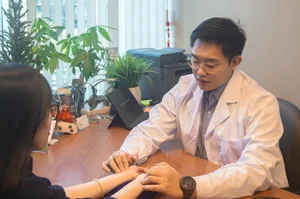
Neil Dou is a Registered Acupuncturist (R.Ac) practicing across Surrey, South Surrey, and Langley, with over 7,000 cases treated across China and Canada. His primary clinical focus includes women's health and chronic pain conditions.
If you are managing endometriosis in Surrey or Greater Vancouver and your current treatment is not fully controlling your symptoms, book an assessmentor call (604) 721-7984.
Who This Is Relevant For
Women with a confirmed diagnosis whose pain is not fully controlled on current treatment
Women who have completed laparoscopy but are still managing significant pain three or more months post-surgery
Women planning to come off hormonal suppression who want to support their cycle before symptoms return
Women managing endometriosis alongside fertility concerns
Women whose endometriosis has been classified as "mild" but whose pain does not reflect that classification
If you have not yet had a diagnosis confirmed, that step comes first.
Does Acupuncture Help Endometriosis Pain?
For most women who complete a genuine course of treatment, yes. A 2017 study in Gynecological Endocrinology reported statistically significant reductions in dysmenorrhea scores in endometriosis patients treated with acupuncture versus controls. A 2019 review in Evidence-Based Complementary and Alternative Medicine found clinically meaningful pain reductions in pelvic pain conditions including endometriosis, with effects maintained at follow-up.
In practice: acupuncture reduces peak pain intensity and, for many patients, the number of days affected per cycle. It does not eliminate pain entirely in most cases. The mechanism involves acupuncture's effects on central nervous system pain-processing pathways and endogenous opioid release.
What it cannot do: remove lesions, replace laparoscopic surgery when surgery is indicated, or substitute for hormonal suppression if that is your gynecologist's recommendation. Acupuncture manages the downstream effects of endometriosis, not the structural condition itself.

What Acupuncture Addresses in Endometriosis
Pelvic and menstrual pain. The clearest area of evidence. Presentations characterized by heavy periods, significant cramping, and persistent pelvic fullness tend to respond better than those where the primary symptom is nerve-type or positional pain.
Inflammation patterns. Endometriosis has a strong inflammatory component. Elevated prostaglandins drive cramping; cytokine activity contributes to pain and fatigue. Acupuncture's effects on inflammatory markers are supported by clinical research and consistent with what is observed in practice.
Nervous system regulation. Chronic pain sensitizes the nervous system over time. The body registers pain signals more intensely than it otherwise would. Acupuncture has documented effects on the autonomic nervous system, reducing sympathetic dominance and supporting parasympathetic recovery. For women whose symptoms worsen significantly under stress, this is often a meaningful lever. The approach overlaps with how acupuncture is used for other chronic pain conditions treated at this practice.
Cycle regulation. Irregular or difficult cycles are common with endometriosis, often compounded by hormonal treatments that are then stopped. For women where cycle disruption is the primary concern, the acupuncture for menstrual health article covers how TCM approaches this in more detail.
Results Patients Typically See
These are realistic ranges, not guarantees. Endometriosis varies significantly between patients, and response to acupuncture varies with it.
Pain intensity: Most women who respond report a reduction in peak intensity rather than elimination. A cycle that previously required strong NSAIDs for three to four days may come down to one to two days of manageable discomfort. Some women report more significant reductions. Some report modest changes only.
Cycle regularity: Improvements in premenstrual symptoms, including mood changes, bloating, and breast tenderness, are commonly reported within the first two to three cycles of treatment. Cycle length stabilization typically takes longer.
Energy and fatigue: The fatigue associated with endometriosis is often disproportionate to sleep. It tends to shift before pain does, and women frequently report it as the first change they notice. The fatigue management page covers how TCM addresses this specifically.
Timeline: Meaningful change typically appears after six to eight sessions, not two. Women who approach acupuncture as a sustained management strategy report cumulative improvement that holds between cycles.
If nothing has shifted by session eight, the treatment plan is reassessed. Continuing the same approach without progress is not the standard here.
How Many Sessions Does Acupuncture Take for Endometriosis?
Evaluate after six to eight sessions. That is long enough to establish a response without committing indefinitely before knowing whether it is working.
The first phase, typically eight to twelve sessions, establishes baseline response and identifies which aspects of your presentation are most amenable to acupuncture. Most women who respond well then move into a monthly maintenance pattern, timed around their cycle, with more frequent sessions during a difficult period or stressful stretch.
The goal is not permanent weekly treatment. It is a sustainable tool you can increase or reduce based on what your body is doing. The how to tell if acupuncture is working article covers what to look for across a treatment course.
Is Acupuncture Safe Alongside Hormonal Treatment for Endometriosis?
Yes. Acupuncture does not interfere with hormonal medications or suppression treatments. The approaches run alongside each other without conflict.
The most effective approach is acupuncture running parallel to medical management. Your gynecologist manages the structural dimension of the condition. Acupuncture manages the pain load, the nervous system sensitization, and the cycle disruption. These are complementary roles.
If a practitioner tells you to stop your medical treatment to "give TCM a chance," that is not a treatment plan.
What Happens in a Session
The first appointment is a 45-minute assessment covering your diagnosis history, current and previous treatments, and your specific symptom pattern. This maps onto a TCM diagnostic framework before any treatment begins.
The two most common presentations in endometriosis cases are Blood Stagnation (fixed, severe pain, heavy periods with clotting, and stabbing quality) and a combined Qi Stagnation and Heat pattern (more variable pain, strong premenstrual mood changes, heat sensitivity). These determine which acupuncture points are used and how treatment is timed within the cycle. A generic protocol is not used because the presentation varies too much for that to be clinically useful.
For women managing endometriosis and fertility concerns simultaneously, treatment timing is often coordinated to address both. The acupuncture for fertility article covers how that is structured.
Alongside Medical Treatment
Acupuncture does not ask you to change what your gynecologist has prescribed. The approaches run alongside each other.
For women where PCOS and endometriosis overlap (which is not uncommon), the acupuncture for PCOS article covers relevant ground. The full range of gynecological conditions treated at this practice is on the women's health service page.
Women who integrate acupuncture earlier in their management tend to see better outcomes than those who come in after years of high pain burden. Nervous system sensitization that develops with undertreated chronic pain is harder to shift than early-stage patterns.

What Patients Have Experienced
Melissa Lee came in after four years of PCOS and an infertility diagnosis from her gynecologist:
"Highly recommend. Don't know what to say so just some facts here: 4 years of PCOS, diagnosed with infertility by gynecologist, 4 months with Neil, just conceived. Let's see what more Neil is able to do."
For women managing overlapping gynecological conditions, this reflects what consistent, correctly targeted treatment can produce. It is not a guarantee. It is an example of what is possible when the presentation is well-matched to the approach.
Who This Is and Is Not For
Appropriate if:
You have a confirmed endometriosis diagnosis
Your pain is not fully controlled by current treatment
You are willing to commit to at least six to eight sessions before evaluating results
You want active symptom management between medical interventions
Not the right starting point if:
You have not yet had a diagnosis confirmed
You are in acute surgical recovery without surgical clearance
You are looking for a single treatment or a one-off answer
How Neil Approaches Endometriosis Cases
Neil Dou is a Registered Acupuncturist (R.Ac) registered with the College of Complementary Health Professionals of BC. He completed a four-year advanced acupuncture program at Kwantlen Polytechnic University in Richmond and holds a Bachelor's in Psychology from UBC. He teaches TCM at the Canadian College of Naturopathic Medicine and serves as Vice President of the ATCMA. His advanced training includes Fu's Subcutaneous Needling, scalp acupuncture studied under Professor Jiao Shunfa, and Yellow Emperor Style Acupuncture.
Neil practices at three locations in Greater Vancouver: Surrey (Mondays, Wednesdays, Fridays), South Surrey (Mondays), and Langley (Saturdays). Full credentials are on the about Neil page.
Book an Assessment in Surrey or Greater Vancouver
If your endometriosis symptoms are not fully controlled by current treatment, an acupuncture assessment is a reasonable next step. No referral is needed.
The first appointment covers your diagnosis history, symptom pattern, and current medical management. At the end of it, you will have a clear picture of what acupuncture can realistically offer for your specific presentation. If acupuncture is not a good fit, that is what you will be told.
Neil sees patients across Greater Vancouver: Surrey, South Surrey, and Langley.
Book an assessment or reach out by phone or SMS at (604) 721-7984.

Neil Dou, R.TCMP & R.Ac
Experienced & Trusted TCM Care
Registered Traditional Chinese Medicine Practitioner & Registered Acupuncturist in BC with extensive clinical experience in both China and Canada.
Serving Richmond, Surrey & Greater Vancouver
Provides personalized acupuncture treatments and home visits across Richmond, Surrey, and Burnaby, recognized for effective care and positive patient feedback.
Proven Results With a Holistic Approach
With over 7,000 successful treatments, care focuses on pain relief, internal medicine, and long term healing through a holistic approach that combines acupuncture, food therapy, cupping, gua sha, and lifestyle guidance.