Acupuncture for upper back pain treats the overworked muscles between the shoulder blades, mainly the rhomboids and middle trapezius, along with the upper back stiffness that keeps them overloaded. In TCM, this pain is read differently from neck pain, so the assessment first checks where the problem starts. When the muscles feel dense and ropy, cupping or gua sha is often added to the same session.
Why Upper Back Pain Is Treated Differently From Neck Pain
Pain between the shoulder blades rarely comes from one bad movement. It builds from hours at a desk or laptop with the shoulders rounded forward. In that position, the muscles between the shoulder blades are held long and working all day to stop the shoulders sliding further forward. They tend to get tired, sore, and knotted rather than simply tight, while the chest muscles in front shorten and keep pulling the shoulders forward.
That is the difference in emphasis from our neck and shoulder pain article. There, the upper trapezius is almost never the origin; it compensates for restrictions higher up, in the upper neck or the first two thoracic segments. Between the shoulder blades, the problem is more often a stiff upper back and overloaded rhomboids, so treatment is directed lower. The levator scapulae, which runs from the neck to the top corner of the shoulder blade, is checked too, because it often links the two patterns.
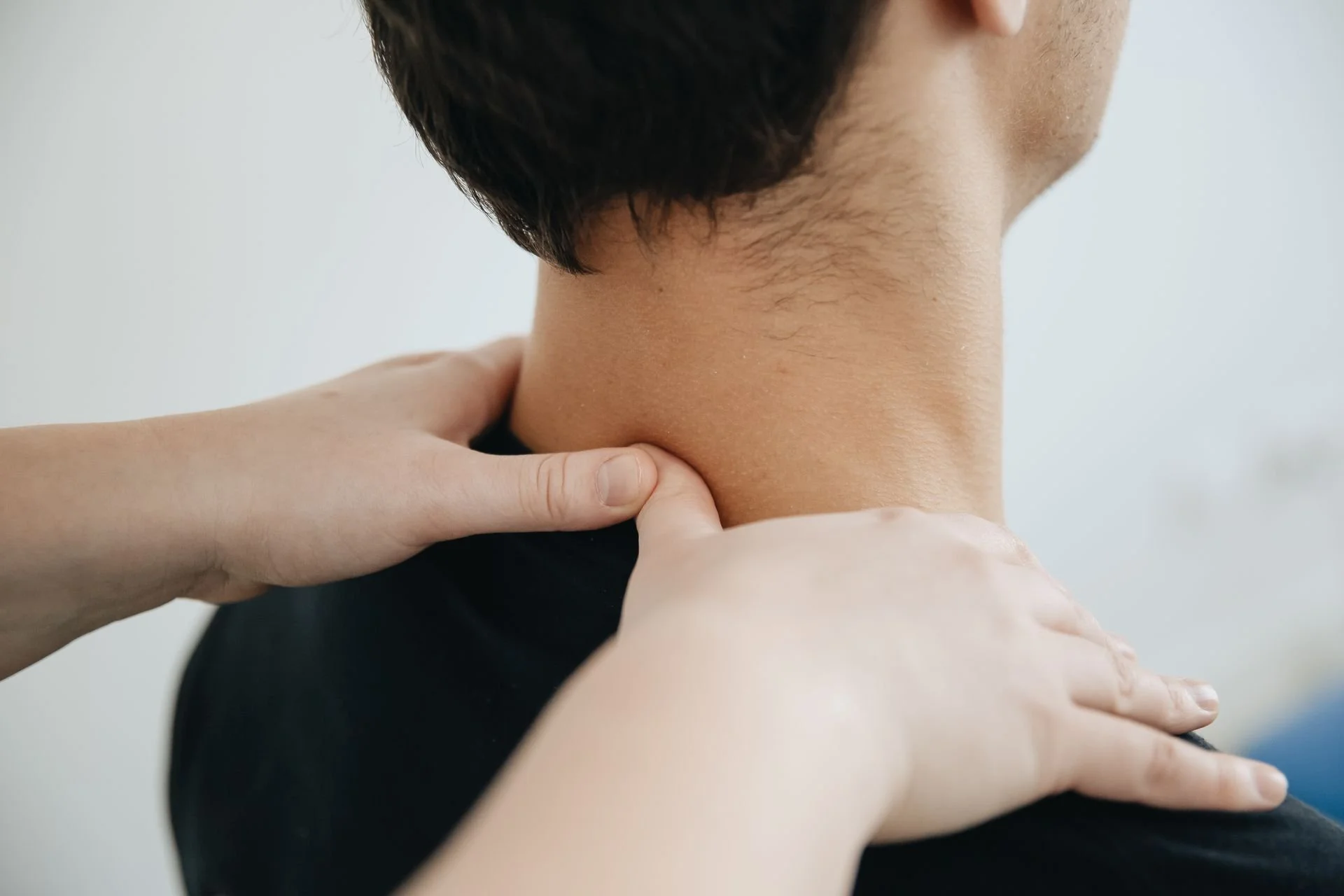
Pain in this area can also be referred from the neck. That is why it matters how your neck moves, not just where the pain sits. If turning or tilting your head brings on the pain between your shoulder blades, the neck is part of the picture.
TCM adds its own reading. Two acupuncture channels run through this area: the Bladder channel down either side of the spine and the Small Intestine channel across the shoulder blade. Pain from long hours in one position is usually read as Qi and Blood stagnation, which is the TCM way of describing poor local circulation in muscles that never get to move. Stiffness that worsens in cold, damp weather, which Greater Vancouver has plenty of, points to Wind-Cold. Tension that rises with stress points to the Liver, and it is the same stress that tightens the chest and draws the shoulders up and forward. The reading changes which points are chosen and whether heat or cupping is added.
What Acupuncture for Upper Back Pain Involves
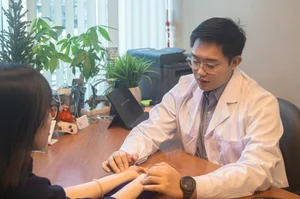
The first appointment is an assessment, not just treatment. Neil Dou, R.Ac & R.TCMP, has treated over 7,000 cases with a primary focus on chronic pain and musculoskeletal conditions, teaches at the Canadian College of Naturopathic Medicine, and serves as Vice President of the ATCMA. At the first visit he looks at where the restriction starts, how long the pattern has been there, and what keeps it going. If acupuncture is appropriate, treatment usually begins in the same session.
Local points. Fine needles are placed into tight bands and trigger points in the rhomboids, middle trapezius, and the muscles beside the upper spine. When a needle reaches a tight band, a brief dull ache is common, often followed by a sense of release.
Careful depth. The lungs sit beneath the upper back, so needles here are angled or kept shallow, never driven straight down toward the chest. This is one reason upper back treatment should only be done by a registered practitioner.
Distant points. Points on the hand and arm along the same channels are often added, such as Houxi (SI3) on the outer edge of the hand.
As with Neil’s neck and shoulder treatments, needles are usually retained for 20 to 30 minutes, and mild soreness for 24 to 48 hours after the first one or two sessions is normal. Wear or bring a loose top so the upper back is easy to reach.
If the pain started after a car accident, ICBC direct billing is available at the Surrey clinic. Bring your claim number.
When Cupping or Gua Sha Is Added
Acupuncture works on the trigger points. Cupping and gua sha work on the tissue around them.
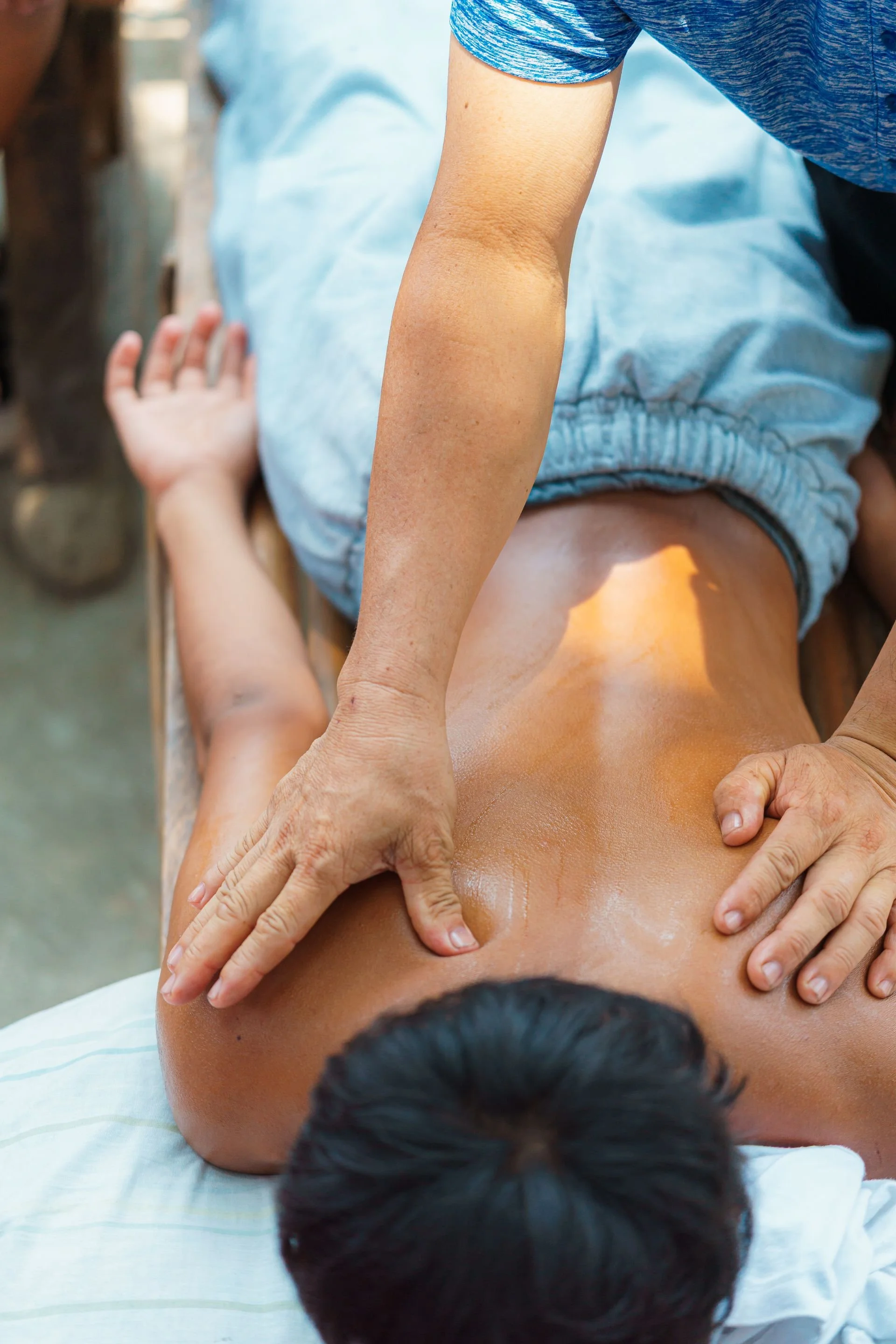
Cupping is added when the upper back feels dense or ropy, or has firm bands across it. The suction lifts the surface tissue away from the muscle below, improves local circulation, and eases the stuck feeling across the rhomboid area. Neil’s article on cupping for muscle tension and stiffness covers cupping in more detail.
Gua sha is another option for knots and fascia tightness across the shoulder blades. Smooth scraping with a rounded tool covers a wider area than cups. In TCM terms, it clears stagnation from the surface.
Both can leave temporary red or purple marks, which are expected. Cupping marks usually fade within about 1 to 10 days.
Treating trigger points alone, when the surrounding tissue is also restricted, limits how much improvement lasts between sessions. That is why the two are often combined for long-standing desk-related pain.
Two Acupressure Points for Between and Above the Shoulder Blades
Both points sit on the muscles that desk posture overloads most: one in the band between the spine and the shoulder blade, one on the top of the shoulder where the same tension collects when the shoulders round forward. Houxi (SI3), a hand point for upper back and shoulder blade pain, is covered in our guide to acupressure for shoulder and back pain.
1. Gaohuang (BL43): beside the inner edge of the shoulder blade
This point sits right between the spine and the shoulder blade, against the inner edge of the blade, roughly level with its upper third. It is usually tender when the upper back is tight. You cannot easily reach it with your own hand, so place a tennis ball between your shoulder blade and a wall and lean in gently. Hold steady pressure for about a minute on each side, breathing slowly.
2. Jianjing (GB21): the top of the shoulder
Find the bony bump at the base of your neck and the outer point of your shoulder. Jianjing sits halfway between them, on the highest part of the shoulder muscle. Squeeze the muscle gently between your thumb and fingers, or press down with the opposite hand, for about a minute on each side. Do not use Jianjing during pregnancy. It is a standard contraindication in TCM.
Use firm but comfortable pressure. Stop if you feel sharp pain, numbness, or tingling.
When Upper Back Pain Needs a Doctor First
Most upper back pain is muscular. Some is not. Get medical care first if:
Pain between the shoulder blades comes with chest pain or pressure, shortness of breath, sweating, or nausea. That can be a sign of a heart problem. Call 9-1-1.
You have numbness, tingling, or weakness down an arm that has not been assessed.
The pain followed a fall, accident, or injury that has not been imaged.
The pain comes with a fever or unexplained weight loss, or is worse at night no matter how you lie.
If your back pain is mainly lower down, our article on acupuncture for lower back pain covers that pattern. If upper back pain is one part of a longer, wider pain picture, the chronic pain approach applies.
FAQ
-
Neil’s published timeline for neck and shoulder pain is that most patients see meaningful improvement within 4 to 6 sessions, with a full plan typically running 4 to 8. For pain centred between the shoulder blades, Neil gives a specific estimate at the first appointment, based on what the assessment shows.
-
They do different jobs. Acupuncture releases trigger points and calms the nervous system’s response to pain, while cupping eases restriction in the surrounding tissue. When the upper back has both, which is common with desk-related pain, using them together usually holds up better between sessions than either alone.
-
Yes. Acupuncture can ease the muscle tension and pain that come from long hours in one position. It does not change your posture on its own, so self-management forms part of every treatment plan. That can include simple changes such as raising your screen so you are not leaning toward it and taking regular breaks.
Book an Upper Back Assessment
If the ache between your shoulder blades has been part of your workday for more than a few weeks, an assessment is worth booking. Text Neil at (604) 721-7984 or use the contact page to book a free 15-minute consultation. Neil practises in Surrey, Langley, and Richmond, and offers home visits in Surrey, Langley, Richmond, and Burnaby.
Contact Neil
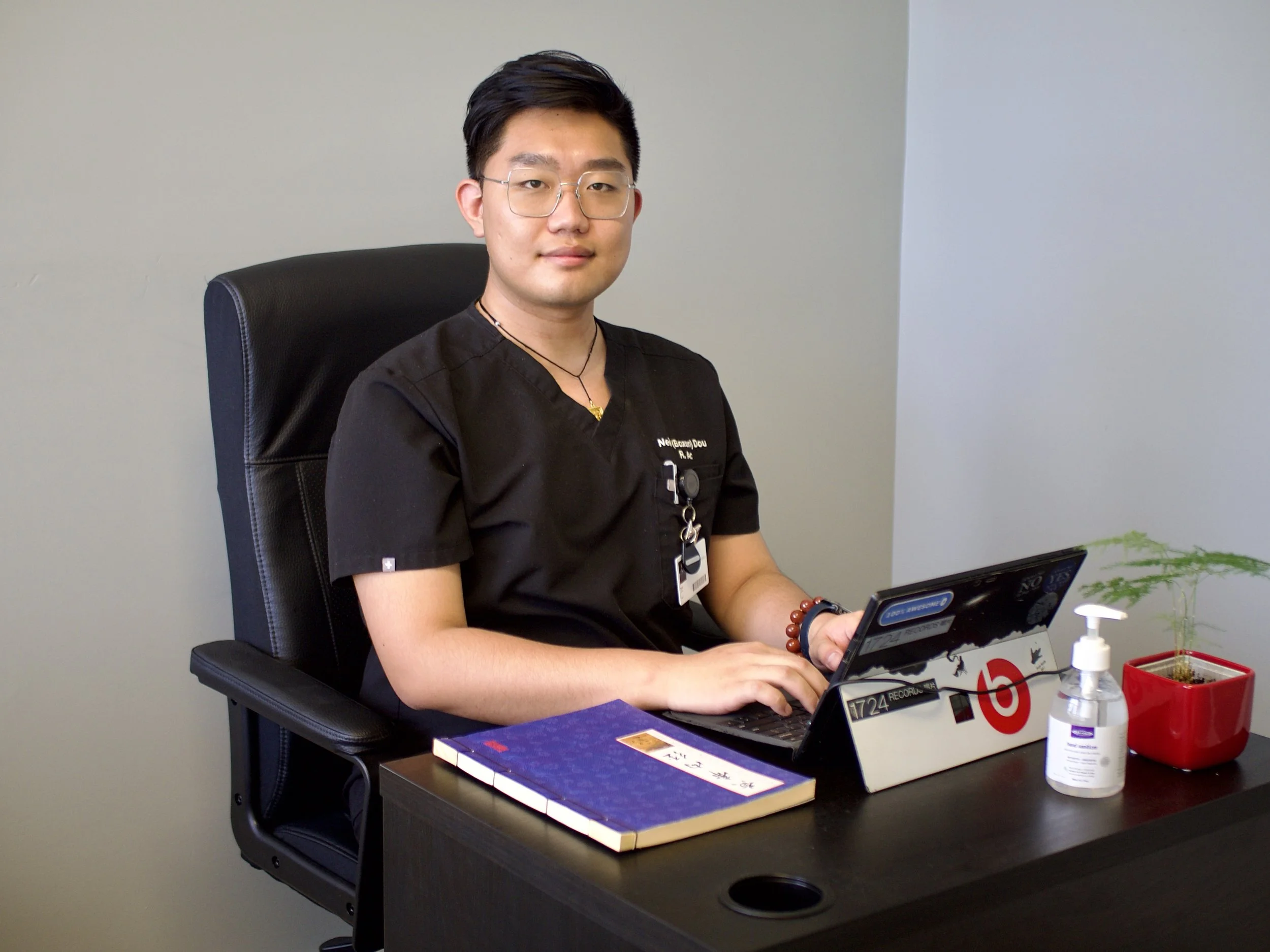
Neil Dou, R.Ac & R.TCMP
Registered Traditional Chinese Medicine Practitioner & Registered Acupuncturist in BC with extensive clinical experience in both China and Canada.