Acupuncture for insomnia in TCM starts by identifying how you sleep badly. Trouble falling asleep, waking at the same time every night, and waking unrefreshed are read as three different patterns, and each gets a different point combination. Neil Dou, R.Ac & R.TCMP, treats sleep problems for patients across Greater Vancouver, with appointments in Surrey, Langley, and Richmond and home visits in Surrey, Langley, Richmond, and Burnaby.
Why Sleep Problems Look Different in TCM
Sleep medication is chosen to get you to sleep. TCM starts from a different question: what is keeping you awake, and why that way? It treats the pattern behind the poor sleep, not only the hours lost.
Sleep problems in TCM rarely sit on their own. They are usually tied to something else: stress that never switches off, a body running hot at night, digestion that is weak, fatigue from overwork, or hormonal change such as perimenopause. That is why a TCM sleep assessment asks about your days as much as your nights.
The timing of the problem is one of the most useful clues. Lying awake at 11 p.m. with a racing mind is approached differently from falling asleep easily and then waking wide awake at 3 a.m.
Three Common Sleep Patterns and How They Are Treated
Sleep problem |
Common TCM reading |
Treatment focus |
|---|---|---|
Cannot fall asleep, mind racing |
Restless Heart Shen, often driven by stress or overthinking |
Calming the mind and settling the nervous system |
Waking between about 1 and 3 a.m. |
Liver Qi constraint, or Liver heat when waking is agitated |
Moving constrained Qi, clearing heat, and releasing tension |
Light, dream-filled sleep, waking unrefreshed |
Heart and Spleen not nourished, often with fatigue or overwork |
Building energy and nourishing Blood |
Difficulty falling asleep
Tired all evening, then wide awake the moment your head hits the pillow: TCM reads this as the Shen, the mind, being unsettled. Treatment centres on calming points such as Shenmen (HT7) at the wrist, Anmian behind the ear, and Yintang between the eyebrows. If anxiety is a big part of the picture, the plan addresses it directly, and our article on TCM and acupuncture for anxiety relief explains how the two connect.
Waking at night
Waking at the same time night after night, often around 3 a.m., has a specific reading. On the traditional TCM organ clock, roughly 1 to 3 a.m. belongs to the Liver, so this timing is read as a sign that stress and constrained Liver Qi are involved, often built up through the day by pressure and frustration that never get released. Taichong (LV3) on the top of the foot is the main point for moving that constraint, usually combined with calming points. When you wake agitated or after vivid dreams, the reading shifts toward Liver heat, and treatment clears heat rather than only moving Qi.
A related variant: when night waking comes with heat, sweating, or flushing, TCM reads it as Yin deficiency with heat, a deeper pattern that often appears around menopause. Neil does not currently prescribe herbal formulas, so this pattern is treated with acupuncture, food therapy, and lifestyle changes such as earlier nights and less late-evening screen time and alcohol. Our guide to acupuncture for menopause covers night sweats and the sleep problems that come with them.
Waking unrefreshed
Some people sleep enough hours and still wake tired, with sleep that feels light and full of dreams. TCM links this to the Heart and Spleen not being nourished, a pattern that usually travels with daytime fatigue and often follows long stretches of overwork, irregular meals, and worry. Treatment builds rather than calms, using points such as Sanyinjiao (SP6) above the inner ankle and Zusanli (ST36) below the knee. When daytime tiredness is the bigger problem, Neil’s fatigue management approach applies.
What a Session for Insomnia Involves
The first appointment is at least an hour. It covers your medical history, current health, and sleep in detail: when you fall asleep, when you wake, what wakes you, how you feel in the morning, and what your days look like. A physical exam, including tongue and pulse diagnosis, shows which pattern is driving the problem.
During treatment, fine sterile needles are placed at points matched to that pattern and left in while you rest. As Neil explains it, about 20 minutes into a session many people feel a deep sense of calm. That calm is the state a sleep treatment works toward, and treatment is adjusted as your sleep changes.
Between appointments, home routines help. Gentle acupressure before bed can take the edge off a restless night, and our guide to acupressure points for sleep walks through seven points and a simple bedtime routine. Acupressure eases the symptom; treatment works on the pattern underneath.
Some sleep problems need a doctor before anything else. Loud snoring, pauses in breathing that a partner notices, and constant daytime sleepiness can be signs of sleep apnea. Talk to your doctor too if poor sleep comes with low mood that will not lift.
Acupuncture and Sleep in Vancouver: Clinic Details
Clinics: BreakThru Kinetics, 7238 137 St #201, Surrey, plus appointments in Langley and Richmond.
Home visits: available in Surrey, Langley, Richmond, and Burnaby for an additional fee, useful when evening fatigue makes travel hard.
First step: a free 15-minute consultation to talk through your sleep before you book.
Coverage: most extended health plans cover acupuncture. Check the details with your insurance provider.
Neil is registered with the College of Complementary Health Professionals of BC, serves as Vice President of the ATCMA, and teaches TCM courses at the Canadian College of Naturopathic Medicine.
FAQ
-
It depends on how long poor sleep has been part of your life and which pattern is behind it. Neil assesses your sleep at the first appointment and recommends a personalized treatment plan from there.
-
Yes. Minor bleeding or a small bruise at a needle site is one of the most common side effects. It is more likely if you bruise easily or take blood thinners, so mention that before treatment. A bruise that keeps spreading or becomes very painful should be checked.
-
Some people feel tearful or unusually emotional after a session. In TCM, physical and emotional health are closely linked, and moving out of a long period of stress or tension can bring feelings to the surface. It usually passes within the day. If low mood lingers, talk to your doctor or practitioner.
Ready to Sleep Better?
If poor sleep has become your normal, an assessment can identify what is driving it and whether acupuncture fits. Text Neil at (604) 721-7984 or use the contact page to book a free 15-minute consultation. Read more about why Neil chose acupuncture and TCM, including his work at his Richmond clinic.
Contact Neil
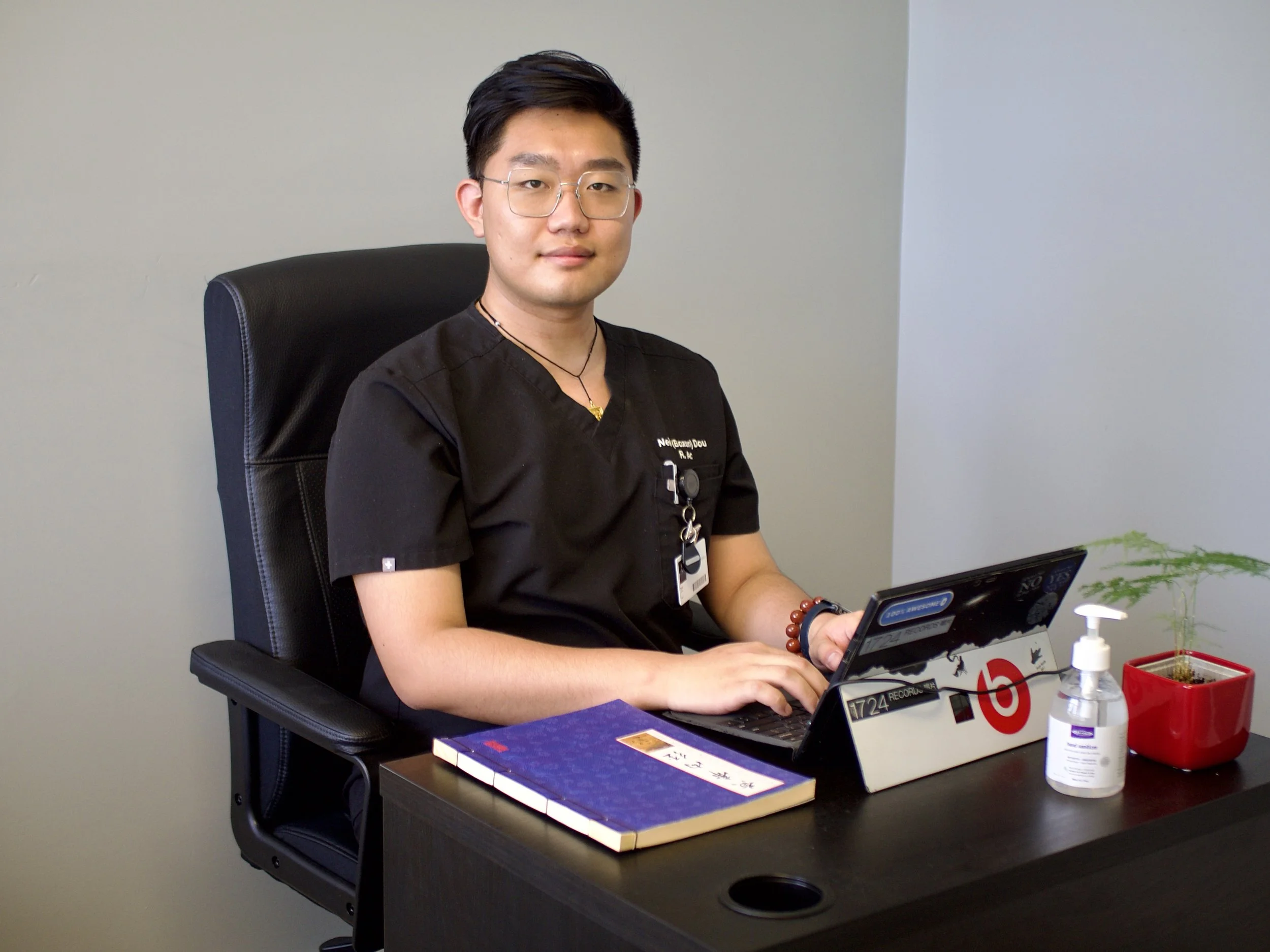
Neil Dou, R.Ac & R.TCMP
Registered Traditional Chinese Medicine Practitioner & Registered Acupuncturist in BC with extensive clinical experience in both China and Canada.