The red or purple marks after a gua sha treatment are called "sha". They are tiny spots of blood just under the skin, known medically as petechiae, raised on purpose by firm scraping strokes. They are an expected part of body gua sha, not a sign of injury, and they usually fade and fully resolve within about 2 to 5 days. Lighter marks tend to clear sooner; darker ones can take a little longer.
What Most People Get Wrong About Gua Sha Bruising
They assume the marks are bruises from too much force. A bruise comes from a blow that damages blood vessels deeper in the tissue. Sha appears as fine red dots or patches at the surface, created by repeated scraping strokes in one direction.
They expect facial gua sha to leave marks too. The gua sha tools sold for home skincare are used with light pressure, and facial gua sha is not meant to leave marks. If an at-home facial tool leaves bruising, the pressure is too strong. Body gua sha in a clinic is a different technique with a different goal.
They think darker marks always mean a better treatment. Colour gives a practitioner information, but it is not a score. A light pink result can be exactly right for the person and the area treated.

What Are Gua Sha Marks?
Gua sha means scraping to raise "sha". A practitioner applies oil to the skin and uses a smooth-edged tool to make repeated, firm strokes along a muscle area, most often the upper back, neck, and shoulders. As the strokes continue, red dots begin to appear and can merge into patches. Strokes continue until the colour stops changing with further strokes, or sooner if the area becomes too uncomfortable.
In TCM terms, sha is seen as stagnation being brought to the surface. That is why the marks tend to appear more over areas that feel stiff, tight, or sore. To learn more about how the treatment works and what it is used for, see our page on gua sha scraping therapy.
What Do Gua Sha Mark Colours Mean?
Practitioners read the colour and spread of sha as part of their assessment. Colour points to the nature of the problem, such as heat, cold, or stasis, and darker marks often reflect tension that has been there longer. The table below reflects the traditional TCM interpretation, which is a guide for treatment rather than a medical diagnosis.
| Colour of sha | Traditional TCM interpretation |
|---|---|
| Light pink or faint red, few dots | Little stagnation in the area |
| Bright red | Heat, or an acute problem such as the start of a cold |
| Dark red or purple patches | Blood stasis, where circulation in the area has become sluggish |
| Very dark purple, almost black | Blood stasis with Cold trapped in the channels |
If you have also had cupping, our guide to what cupping marks mean covers how cupping colours are read.
How Long Do Gua Sha Marks Last?
Most gua sha marks fade and fully resolve within about 2 to 5 days. Faint pink marks clear soonest, while darker purple marks take longer.
Things that affect how long the marks last:
How dark the sha was to begin with
The area treated, since some areas have more circulation than others
How much pressure the treatment needed
Your own skin and circulation
Does Gua Sha Hurt?
Most people describe body gua sha as firm pressure rather than pain, and some find it relieving over tight areas. Spots that are already sore can feel more intense during the strokes. Afterward, the area may feel warm or mildly tender for a short time. Tell your practitioner if the pressure is too strong; it can always be adjusted.
How to Care for Gua Sha Marks
Keep the treated area covered and warm for the rest of the day.
Avoid cold wind and very hot or very cold water on the area, and skip intense exercise for the rest of the day if it feels tender.
Skip saunas and hot tubs for the rest of the day, and wait as long as practical before showering, ideally until the next day.
Drink water and eat a light, warm meal.
Do not scrub, rub, or apply heavy pressure to the marks.
These steps follow traditional TCM aftercare advice: the skin is considered more open after gua sha, so it is kept protected from cold and wind.
When Gua Sha Marks Are Not Normal
Fresh sha can feel slightly raised or bumpy for the first few hours, then flattens and fades steadily within a few days. Contact your practitioner, or see a doctor, if you notice:
Broken skin, scratches, or bleeding at the surface
Swelling, heat, or spreading redness
Marks that are not fading after a week
Bruising that appears in areas that were not treated
Who Should Check Before Having Gua Sha
Talk to your practitioner first if you take blood thinners, have a bleeding disorder, are pregnant, or have a skin condition, rash, or open wound in the area to be treated. It is also not done over recent injuries, varicose veins, or areas of broken skin.
FAQ
-
Body gua sha is meant to raise red or purple marks called sha, but these are surface petechiae rather than a typical bruise from injury. Facial gua sha with home tools should not leave marks.
-
Most marks fade and fully resolve within about 2 to 5 days, with darker marks taking longer than light ones.
-
In traditional TCM interpretation, dark purple sha points to Blood stasis in the area treated, and near-black marks suggest stasis with Cold. It is information for your practitioner, not a medical diagnosis.
-
Nothing reliably makes them disappear overnight. In TCM, warmth and gentle movement support circulation, which is why aftercare focuses on keeping the area warm and covered rather than icing or scrubbing it. Most marks clear on their own within a few days.
-
No. Facial gua sha uses light pressure and should not leave marks. If it does, reduce the pressure.
Considering Gua Sha for Neck, Shoulder, or Back Tension?
If you are dealing with stiffness or ongoing muscle tension and want to know whether gua sha is a good fit, text Neil at (604) 721-7984 or use the contact page with your questions. Neil practises in Surrey and Greater Vancouver and also offers home visits in Richmond, Surrey, and Burnaby.
Contact Neil
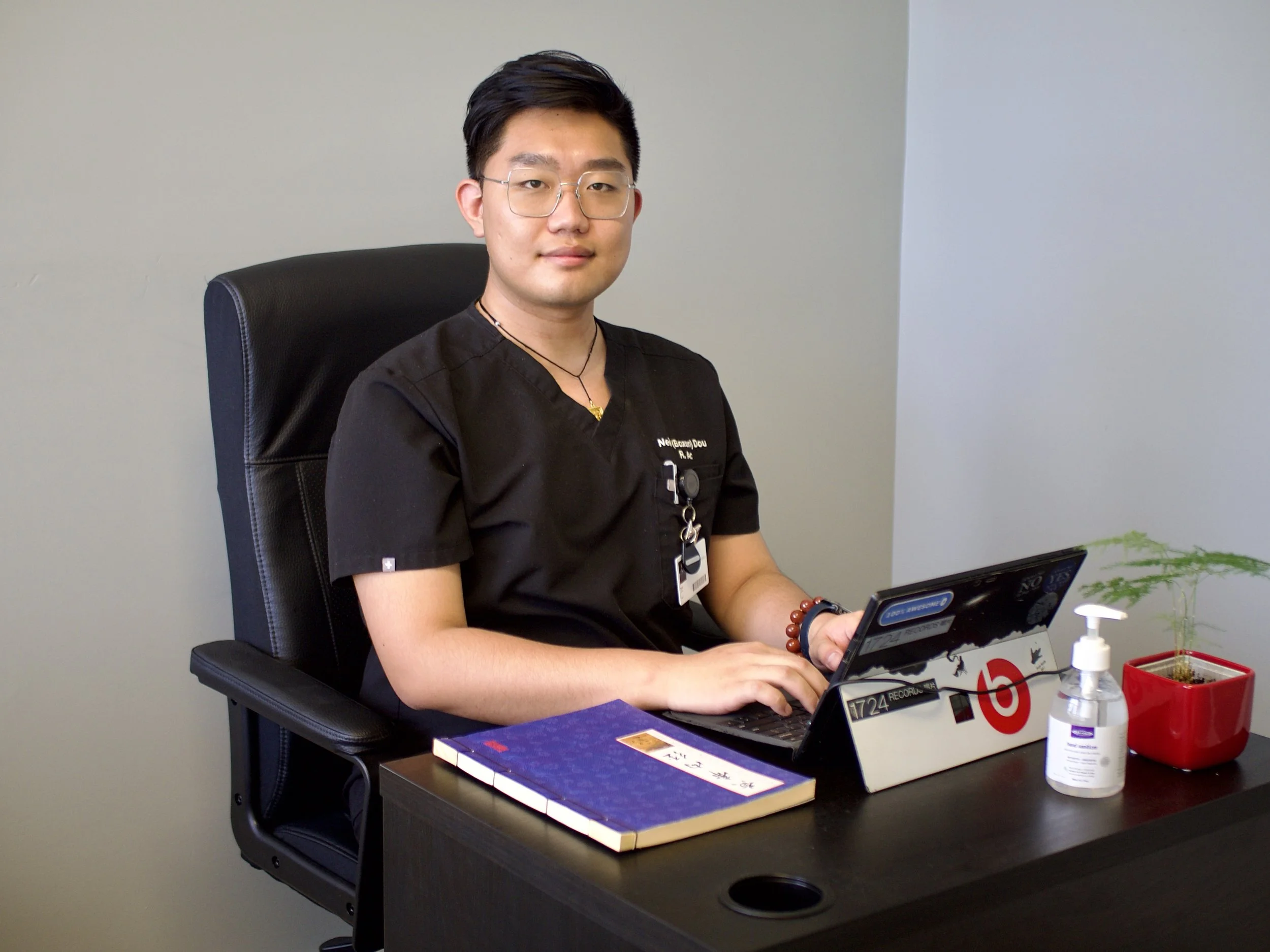
Neil Dou, R.TCMP & R.Ac
Registered Traditional Chinese Medicine Practitioner & Registered Acupuncturist in BC with extensive clinical experience in both China and Canada.