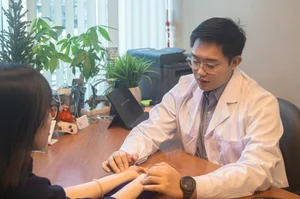
The acupressure points most often used for sleep are Shenmen (HT7) on the wrist crease, Anmian behind the ear, Yintang between the eyebrows, Neiguan (PC6) on the inner forearm, Yongquan (KD1) on the sole of the foot, Sanyinjiao (SP6) above the inner ankle, and Taichong (LV3) on the top of the foot. Press each one gently and steadily for about a minute as part of a short routine before and in bed. Which points help most depends on whether you struggle to fall asleep, wake during the night, or sleep lightly.
What Most People Get Wrong About Acupressure for Sleep
They treat every kind of poor sleep as the same problem. Traditional Chinese Medicine separates trouble falling asleep, waking at the same time every night, and light, dream-filled sleep, because each tends to point to a different underlying pattern. A racing mind at 11 p.m. and waking wide awake at 3 a.m. are not approached the same way. On the traditional TCM organ clock, roughly 1 to 3 a.m. is the Liver's time, so waking in that window night after night is read as a clue that stress and constrained Liver Qi are part of the picture.
They try it once in the middle of a bad night. Acupressure for sleep works best as a consistent routine, done the same way at the same time each night, so the body learns to associate it with winding down.
They press too hard. Unlike acupressure for pain, sleep points respond better to gentle, slow pressure combined with slow breathing. Hard pressing can be stimulating rather than calming.
Match the Points to How You Sleep Badly
| Your sleep problem | Common TCM view | Points to start with |
|---|---|---|
| Cannot fall asleep, mind racing | Restless Heart Shen, often with stress or overthinking | Shenmen (HT7), Yintang, Anmian |
| Waking between about 1 and 3 a.m. | Often linked to Liver Qi constraint and stress | Taichong (LV3), Anmian, Neiguan (PC6) |
| Light sleep, lots of dreams | Heart and Spleen not nourished, often with fatigue or overwork | Shenmen (HT7), Sanyinjiao (SP6) |
| Feeling wired and hot at night | Yin not anchoring Yang in TCM terms | Yongquan (KD1), Sanyinjiao (SP6) |
| Anxious and unsettled at bedtime | Heart and Pericardium disturbance | Neiguan (PC6), Yintang |
The 7 Acupressure Points for Sleep
1. Shenmen (HT7): the wrist crease
Turn your palm up and find the crease where the wrist meets the hand. Follow it to the side of the little finger, where there is a small hollow just inside the tendon. Press gently with your thumb. Shenmen translates as "spirit gate" and is one of the most commonly used points for calming the mind before sleep.
2. Anmian: behind the ear
Find the bony bump behind your earlobe. The point sits just behind and slightly below that bump, about halfway to the hollow at the base of the skull. Anmian means "peaceful sleep", and it is used specifically for insomnia. Use slow circles on both sides at the same time.
3. Yintang: between the eyebrows
The point sits directly between the eyebrows. Rest a fingertip there and apply light, steady pressure while breathing slowly. It is often used for a busy mind and for stress that keeps you awake.
4. Neiguan (PC6): the inner forearm
Using your own fingers, measure three finger widths up from the wrist crease toward the elbow, on the inside of your forearm, between the two central tendons. Press with your thumb. Neiguan is traditionally used to calm anxiety and settle the chest, which makes it useful when worry is what keeps you up.
5. Yongquan (KD1): the sole of the foot
Curl your toes. The point is in the depression that forms on the sole, about one third of the way from the base of the toes to the heel. Press or rub with steady, comfortable pressure. In TCM, this point draws energy downward, which is why it is used when you feel wired, hot, or restless at night.
6. Sanyinjiao (SP6): above the inner ankle
Measure four finger widths above the tip of the inner ankle bone, just behind the shin bone. Press gently; this point is often tender. It is used for sleep problems connected with fatigue, stress, and hormonal changes. Do not use Sanyinjiao during pregnancy; it is a standard contraindication for pregnant patients.
7. Taichong (LV3): the top of the foot
Slide a finger up from the web between your big toe and second toe until it settles into the dip where the two bones meet. Press gently. In TCM, Taichong is the main point for moving constrained Liver Qi, which is why it suits people who wake at the same time every night with a busy mind.
A Simple Acupressure Routine for Bedtime
Do the foot points first, sitting on the edge of the bed, so you do not have to sit up and reach for your feet once you are relaxed. A warm foot soak beforehand is a traditional and pleasant way to start.
Sitting on the edge of the bed, press Yongquan (KD1) on each sole, then Taichong (LV3) if you tend to wake in the night.
Lie down with the lights dimmed and screens put away.
Take five slow breaths, making the exhale longer than the inhale.
Press Shenmen (HT7) on each wrist.
Circle Anmian behind both ears.
Finish by resting a fingertip on Yintang.
Instead of watching a clock, stay on each point for about ten slow breaths. Counting minutes gives a busy mind a job to do, which is the opposite of what you want. Use gentle pressure throughout. When you are on the right spot, you should notice a mild, dull heaviness or warmth under your finger rather than just pressure on the skin; if you feel nothing, shift a few millimetres. Avoid pressing on broken skin, bruises, or swollen areas, and stop if a point causes sharp pain.
When to Consider Acupuncture for Insomnia
Acupressure can help ease the symptom; it does not change the pattern underneath. If you have been sleeping poorly for weeks, if it is affecting your mood, work, or concentration, or if a few weeks of a nightly routine have not changed anything, that pattern is what a TCM assessment looks for. Sleep problems in TCM rarely sit on their own; they are often tied to stress, anxiety, fatigue, digestion, or hormonal changes such as menopause. Some patterns, such as feeling hot and wired at night with night sweats, reflect a deeper depletion that pressing a point for a minute will not resolve on its own. Acupressure can take the edge off, but those patterns usually need professional treatment and lifestyle changes.
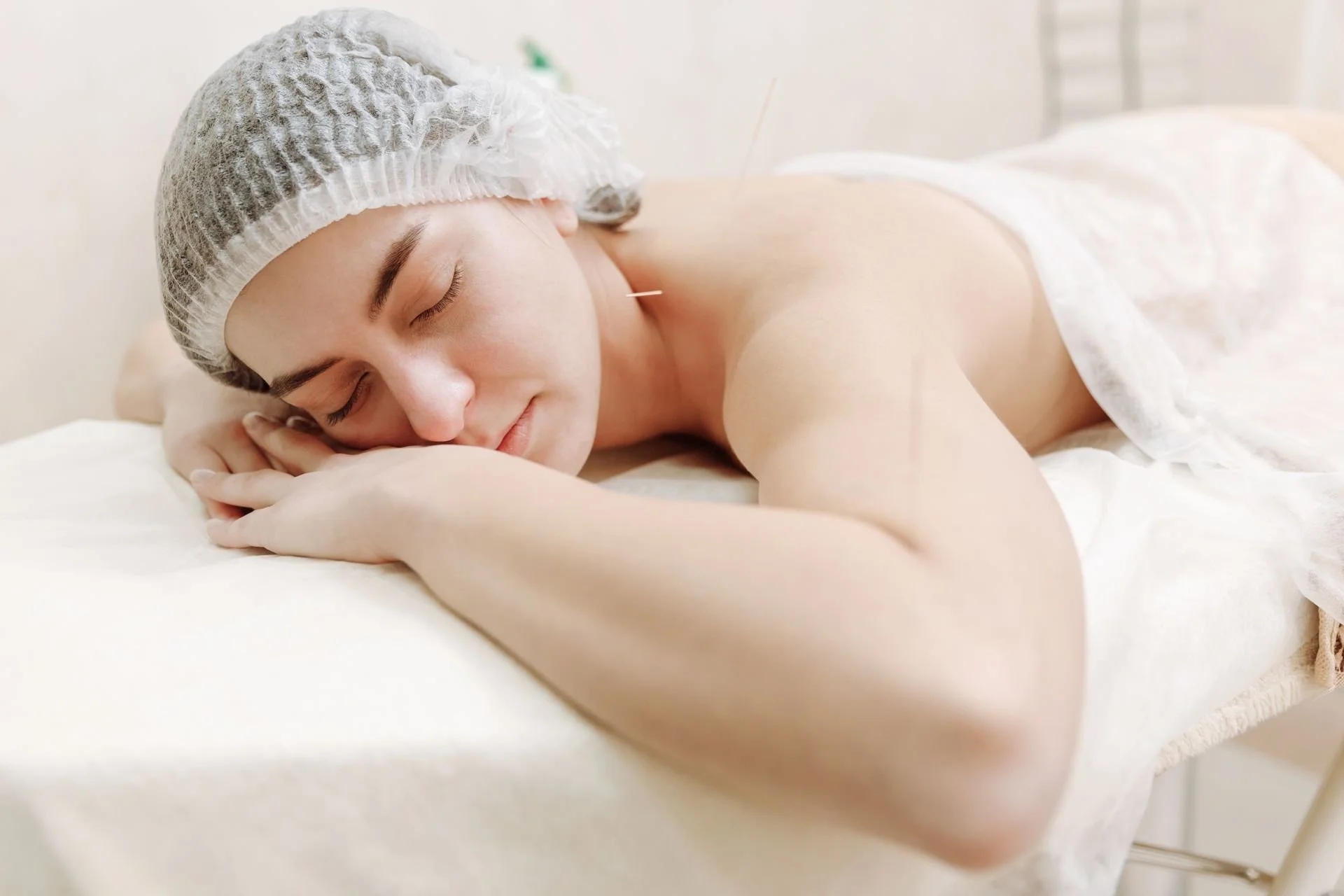
Acupuncture allows a practitioner to work with point combinations matched to your pattern and to adjust them as your sleep changes. If anxiety is part of your picture, our guide to TCM and acupuncture for anxiety relief explains how the two are connected. If ongoing tiredness is the bigger issue, see our fatigue management page, and for more home routines, our acupressure self-care guide.
When Poor Sleep Needs a Doctor
Loud snoring, pauses in breathing during sleep that a partner notices, and constant daytime tiredness can be signs of sleep apnea, which should be checked by your doctor. Talk to your doctor as well if poor sleep comes with ongoing night sweats, low mood that does not lift, or if you rely on sleep medication and want to change how you use it.
For context, adults aged 18 to 64 are generally advised to aim for 7 to 9 hours of good-quality sleep on a regular basis, and adults 65 and older 7 to 8 hours.

FAQ
-
Shenmen (HT7) on the wrist crease and Anmian behind the ear are the most commonly used. The best point for you depends on whether you struggle to fall asleep, wake during the night, or sleep lightly.
-
The main hand and wrist point is Shenmen (HT7), on the palm-side wrist crease in line with the little finger. Neiguan (PC6), three of your own finger widths up from the wrist crease on the inner forearm, is also easy to reach in bed.
-
About ten slow breaths per point, roughly a minute, using gentle, steady pressure. A full routine takes around 10 minutes.
-
Acupuncture is widely used for sleep problems, and many people seek it out when stress, anxiety, or hormonal changes are disrupting their sleep. Research findings are mixed, so it is best viewed as one part of a plan that also includes sleep habits and, where needed, medical care.
-
Yes. A gentle nightly routine is safe for most people and tends to work better than occasional use. Skip Sanyinjiao (SP6) if you are pregnant.
Still Lying Awake?
If poor sleep has become your normal, an assessment can identify what is driving it and whether acupuncture fits. Text Neil at (604) 721-7984 or use the contact page to ask about sleep-focused acupuncture. Neil practises in Surrey and Greater Vancouver and also offers home visits in Richmond, Surrey, and Burnaby.
Contact Neil
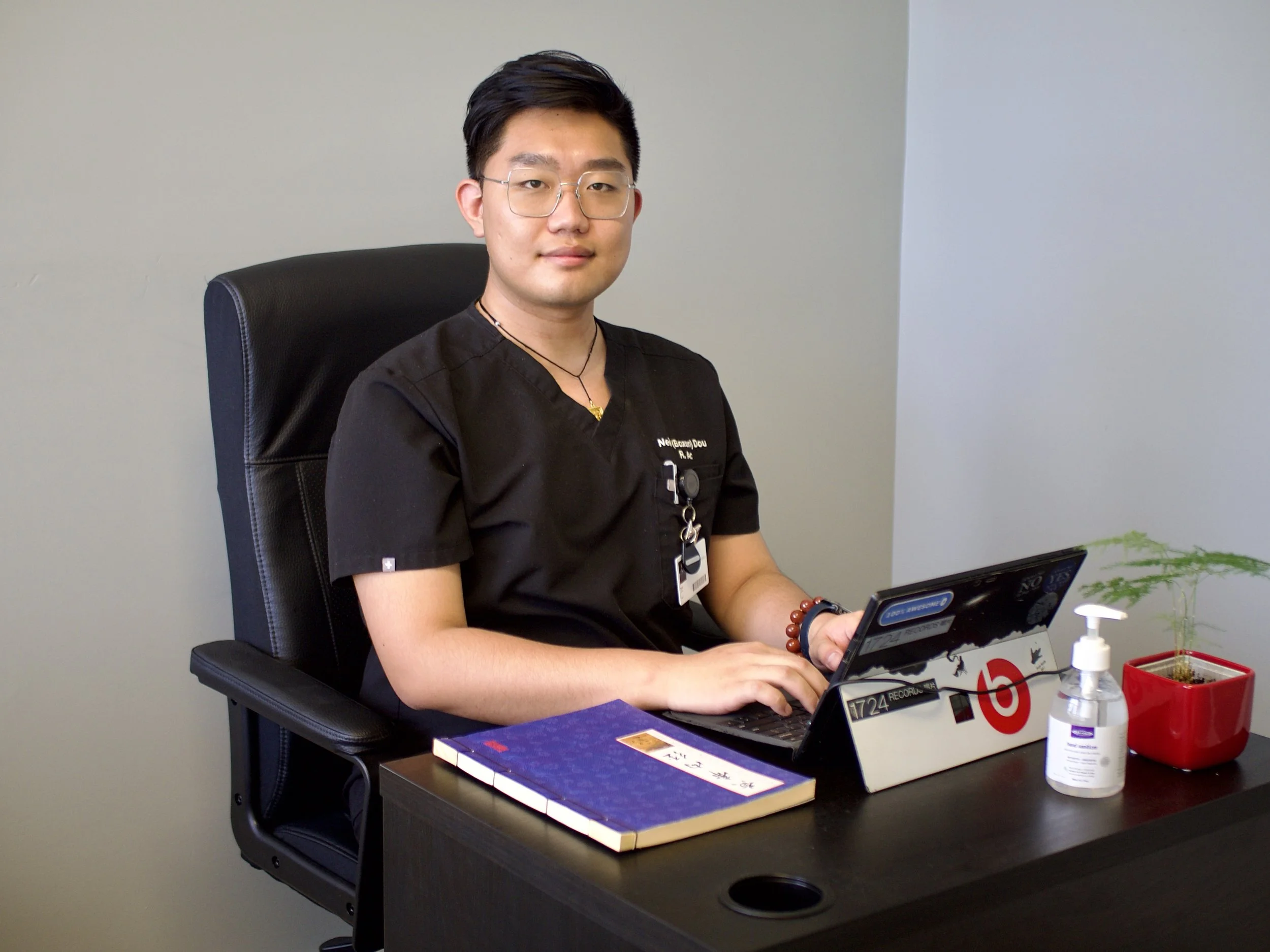
Neil Dou, R.TCMP & R.Ac
Registered Traditional Chinese Medicine Practitioner & Registered Acupuncturist in BC with extensive clinical experience in both China and Canada.