The most widely used acupressure points for headache are Hegu (LI4) on the hand, Fengchi (GB20) at the base of the skull, Taiyang at the temples, and Yintang between the eyebrows. Press each one with steady pressure (firm on most points, gentler at the temples) for one to two minutes while breathing slowly. The best point depends on where your headache sits, so start by noticing whether the pain is at the back of the head, the temples, the forehead, or behind the eyes.
What Most People Get Wrong About Pressure Points for Headaches
They press one random point and give up. Traditional Chinese Medicine does not treat every headache the same way. A headache at the base of the skull that comes with a stiff neck is approached differently from a throbbing pain at the temples or a dull ache behind the eyes.
They press too lightly or too briefly. A quick rub for ten seconds rarely does much. Effective acupressure uses steady, deliberate pressure, held or circled for one to two minutes, until you feel what TCM calls De Qi: a dull, heavy, spreading ache at the point that tells you that you are in the right spot. If you feel only skin pressure, move a few millimetres and try again.
They only use acupressure once the headache is severe. Pressure points tend to work best early, when you first notice tension building, rather than as a last resort at the peak of a bad headache.
Where Does Your Headache Sit? Start Here
| Where it hurts | TCM view | Points to start with |
|---|---|---|
| Back of the head and neck | Tension along the Gallbladder and Bladder channels, often linked to posture and cold or wind exposure | Fengchi (GB20), Jianjing (GB21) |
| Temples and sides of the head | Gallbladder channel, often linked to stress and tension | Taiyang, Hegu (LI4) |
| Forehead | Yangming (Stomach) channel | Yintang, Hegu (LI4) |
| Behind the eyes | Often linked to eye strain and screen fatigue | Zanzhu (BL2), Yintang |
| Stress headaches that come and go | Liver Qi constraint in TCM terms | Taichong (LV3) with Hegu (LI4) |
| Throbbing, one-sided, with irritability or red eyes | Liver Yang rising in TCM terms | Taichong (LV3), Fengchi (GB20) |
Location is a starting point, not a diagnosis. In TCM, two people with the same forehead headache can have different underlying patterns: one driven by heat, another by dampness and a sluggish digestion, another by depleted Blood after a long stretch of overwork. Pressure points can help ease the symptom in all three, but a headache that keeps returning in the same place usually needs the root pattern treated.
The 7 Acupressure Points for Headache Relief
1. Hegu (LI4): the web of the hand
Find it in the fleshy web between your thumb and index finger. Bring the thumb and index finger together; the point sits at the highest part of the muscle bulge, slightly closer to the index finger bone. Press firmly with the thumb of your other hand, angling the pressure toward the index finger bone. This is the most commonly used hand acupressure point for headache, and it is a general point for pain in the head and face.
Do not use Hegu during pregnancy. It is traditionally used to encourage labour and is a standard contraindication for pregnant patients.
2. Fengchi (GB20): the base of the skull
Place your thumbs at the base of your skull, behind the ears, and slide them inward until they settle into the two hollows between the neck muscles. Press upward and slightly inward toward the centre of the head. This point is especially useful for headaches that start at the back of the head or come with a stiff neck after long hours at a desk.
3. Taiyang: the temples
Find the soft hollow about one finger width behind the outer end of the eyebrow, at the temple. Use gentle to medium circular pressure with your fingertips rather than hard pressing, because the temple is a sensitive area.
4. Yintang: between the eyebrows
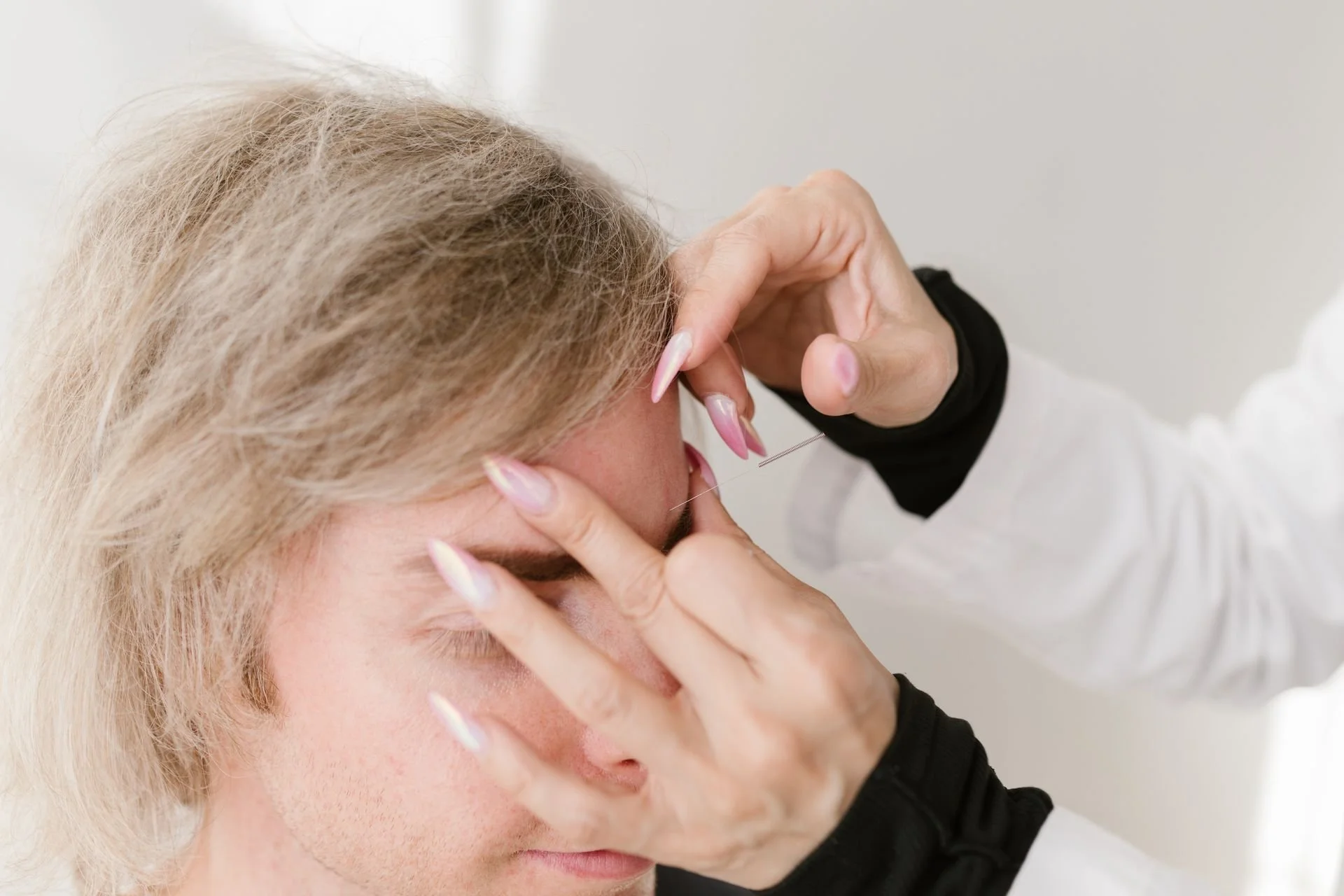
The point sits directly between the eyebrows, where the bridge of the nose meets the forehead. Use one fingertip to apply steady pressure or small circles. Yintang is often used for frontal headaches and also has a calming effect, which makes it useful when a headache comes with stress.
5. Zanzhu (BL2): the inner end of the eyebrow
Find the small notch at the inner end of each eyebrow, just above the inner corner of the eye. Press both sides at once with your index fingers. This point is a common choice for headaches behind the eyes and for tired eyes after screen work.
6. Jianjing (GB21): the top of the shoulder
Find the highest point of the shoulder muscle, roughly halfway between the base of the neck and the tip of the shoulder. Squeeze the muscle between your thumb and fingers or press down firmly. This point can help when shoulder and neck tension climbs up into a headache. Like Hegu, Jianjing is not used during pregnancy.
7. Taichong (LV3): the top of the foot
Slide a finger up from the web between your big toe and second toe until you reach the dip where the two bones meet. Press firmly. In TCM, Taichong is paired with Hegu, a combination known as the Four Gates, which is traditionally used to move Qi and ease stress-related tension.
How to Do Acupressure for a Headache
Sit somewhere comfortable and take a few slow breaths.
Choose two or three points that match where your headache sits.
Match the pressure to the headache: firmer pressure for a tight or throbbing headache (except at the temples, which only ever get gentle to medium pressure), and gentler, slower pressure for a dull headache that comes with tiredness. Either way, aim for a dull ache at the point, never sharp pain.
Hold or circle slowly for one to two minutes per point. For hand and foot points such as Hegu and Taichong, do one side, then switch. For head and shoulder points such as Fengchi, Zanzhu, and Jianjing, use both hands and press both sides at once.
Repeat the routine later in the day if the tension returns.
Avoid pressing on broken skin, bruises, or swollen areas, and stop if a point causes sharp or shooting pain.
How Neck and Shoulder Tension Drive Headaches
Neck and shoulder tension is a common contributor to everyday tension headaches. Long hours at a computer, phone use, and poor sleep posture tighten the muscles of the upper back, neck, and shoulders, and that tension can travel upward. If your headaches tend to arrive with a stiff neck, working on the shoulders is part of the answer. Our guide to acupressure points for shoulder and upper back pain covers the points that release that area, and our acupressure self-care guide adds simple routines for screen-tired eyes.
When Acupressure Is Not Enough
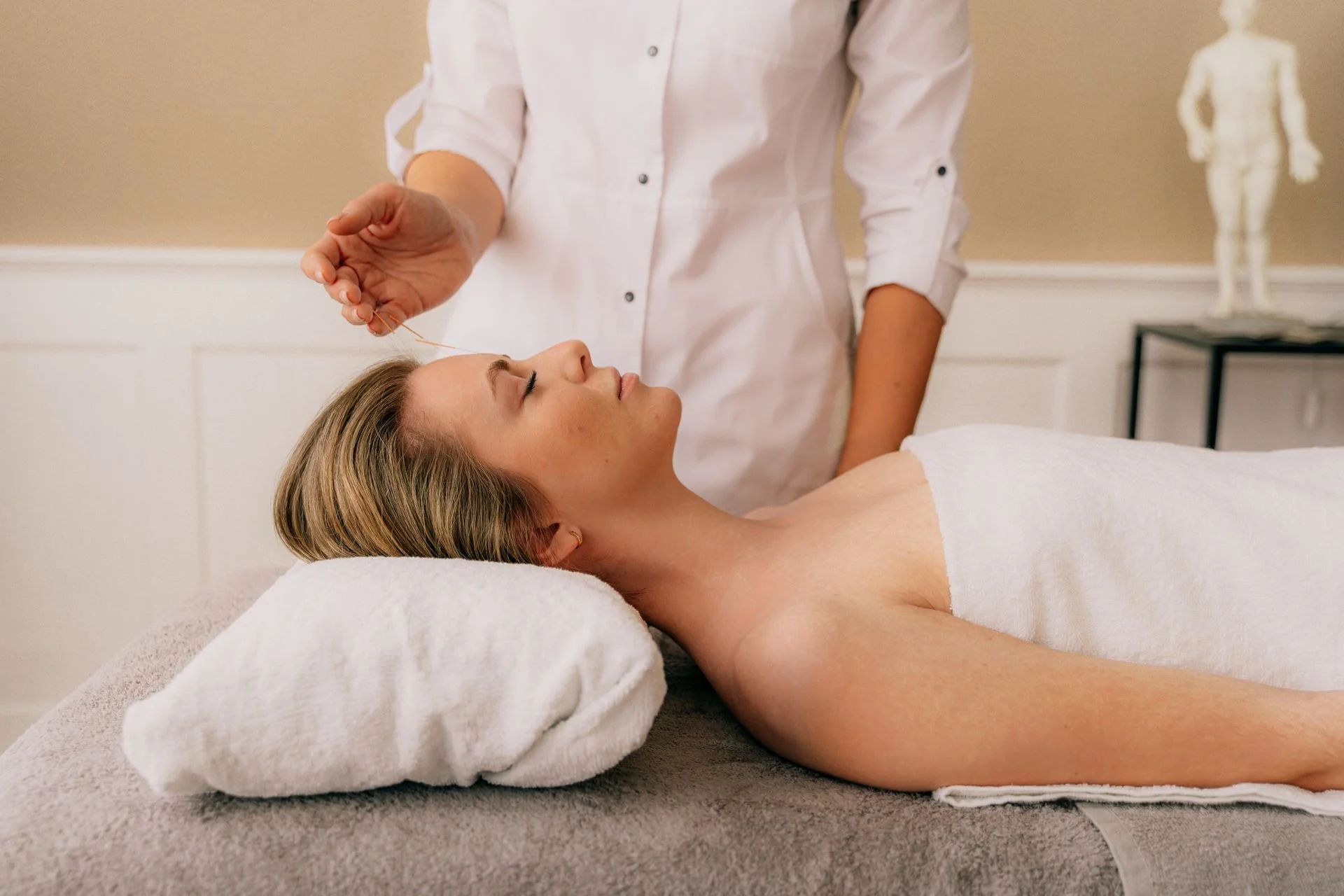
If headaches are frequent, keep returning despite self-care, or are affecting work and sleep, a full assessment is worth considering. Research reviews have found that acupuncture can reduce how often tension-type headaches occur, and an acupuncturist can work with points and techniques that are not possible at home. Treatment for neck and shoulder pain often overlaps with headache care for exactly this reason.
When a Headache Needs Medical Attention
Go to the nearest emergency department if a headache comes with any of the following:
Drowsiness or confusion
Severe nausea and vomiting
Numbness or weakness in the face, arms, or legs, especially on one side
Changes in vision or loss of vision
Fever with a stiff neck
A sudden, severe headache that is unlike any headache you have had before needs emergency care straight away. A headache that follows a head injury also needs prompt medical assessment.
FAQ
-
Hegu (LI4) on the hand is the most widely used general point, and Fengchi (GB20) at the base of the skull is a common choice for tension headaches. The fastest point for you depends on where your headache sits.
-
The main hand point is Hegu (LI4), in the fleshy web between the thumb and index finger. Press toward the index finger bone with firm pressure for one to two minutes. Do not use this point during pregnancy.
-
Zanzhu (BL2) at the inner end of each eyebrow and Yintang between the eyebrows are the usual starting points for pain behind the eyes, especially after screen work.
-
Hold or circle each point for one to two minutes with steady pressure, gentler at the temples. Do hand and foot points one side at a time, and press paired head points, such as Fengchi and Zanzhu, on both sides at once.
-
Some people use acupressure to ease migraine discomfort, but migraines often need a broader plan. If you have migraines, talk to your doctor and consider a professional assessment rather than relying on self-care alone.
Headaches Keep Coming Back?
If headaches are a regular part of your week, an assessment can identify the pattern behind them, whether that is neck and shoulder tension, stress, or something deeper. Neil practises in Surrey and Greater Vancouver and also offers home visits in Richmond, Surrey, and Burnaby. Text Neil at (604) 721-7984 or use the contact page to ask whether acupuncture is a good fit.
Contact Neil
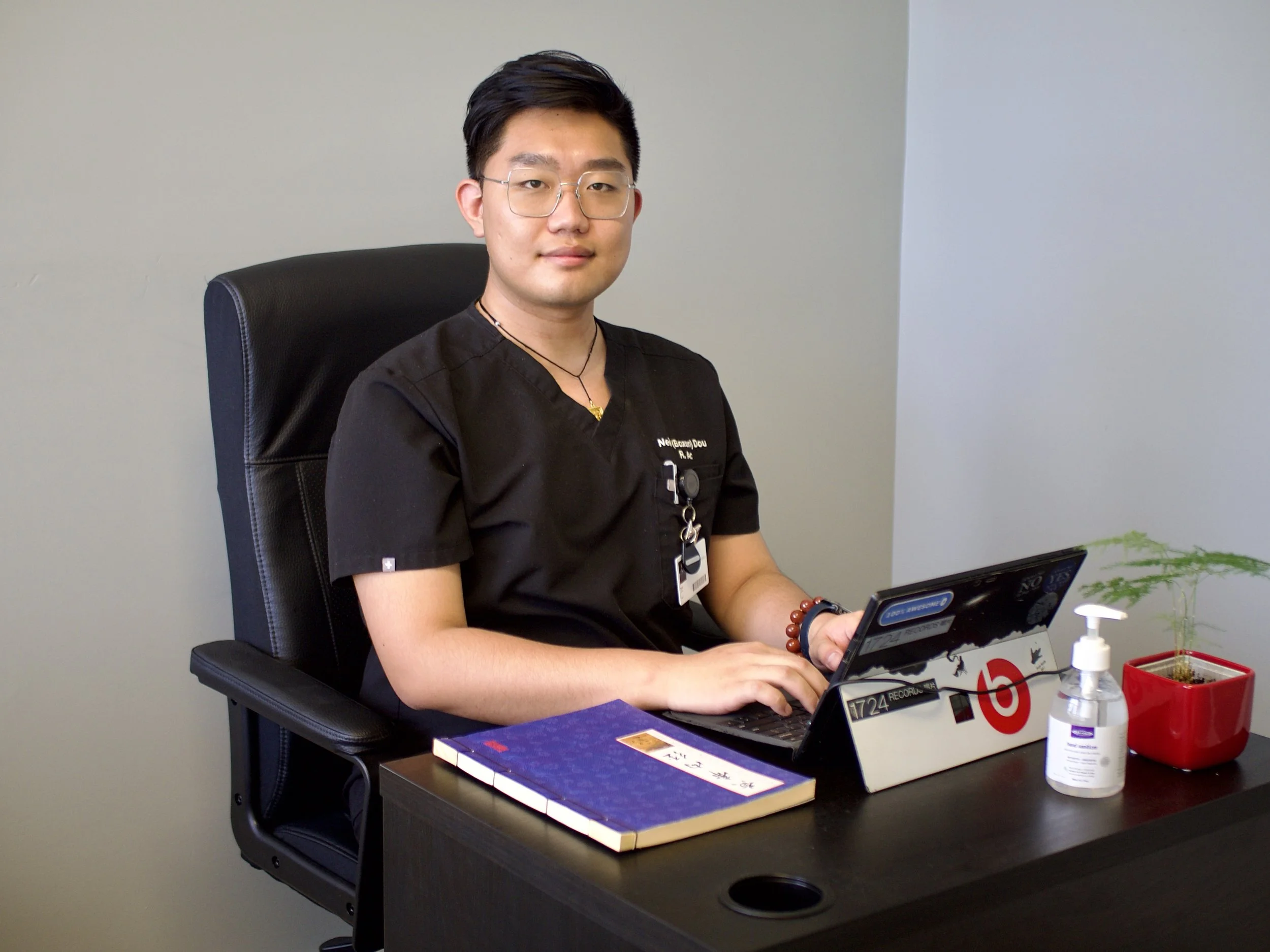
Neil Dou, R.TCMP & R.Ac
Registered Traditional Chinese Medicine Practitioner & Registered Acupuncturist in BC with extensive clinical experience in both China and Canada.