
Acupuncture for PCOS
PCOS presents differently across patients, so acupuncture treatment is matched to one of four Traditional Chinese Medicine patterns rather than applied as a single fixed protocol. Neil Dou, R.TCMP, treats PCOS across Surrey, South Surrey, and Langley, typically over three to six menstrual cycles, addressing ovarian blood flow, insulin sensitivity, and hormonal signalling.
PCOS is not one condition. It presents differently in different women, which is why the same treatment plan rarely works across the board.
Some women have cycles that vanish for three or four months at a time. Others have regular periods but cystic acne along the jawline, thinning hair at the crown, and stubborn weight changes. A third group came off birth control to try to conceive and is now watching cycles that never quite settle.
If you are in Surrey, South Surrey, or Langley and reading this, you have likely already had the bloodwork, the ultrasound, and the conversation about metformin or birth control. Acupuncture has a real place in PCOS care when expectations match what it can actually do. If you want a broader view of how gynecological conditions are approached here, see the women's health acupuncture page.
This page covers what acupuncture addresses in PCOS, what a treatment plan looks like, how long it takes to see measurable change, and who this approach is not suited for.
Who This Is Relevant For
You may benefit from acupuncture for PCOS if:
Your cycles are longer than 35 days or absent for months at a time
You have a PCOS diagnosis and are planning to conceive within the next year
You have been on birth control for years and came off it, but your cycle has not normalised
You have androgen-driven symptoms including jawline acne, hair thinning at the crown, or unwanted hair growth
Your doctor has recommended metformin or birth control and you want a complementary approach
You are based in Surrey, South Surrey, Langley, or nearby
What Acupuncture Addresses in PCOS
PCOS is a metabolic and endocrine condition, not purely reproductive. The cysts on the ovaries are a symptom, not the cause. The causes sit upstream: insulin resistance, elevated androgens, and disrupted communication between the brain and the ovaries through the HPO axis.
Acupuncture influences each of these through four mechanisms:
Ovarian blood flow. Needling points on the lower abdomen and lower back increases blood flow to the ovaries. Better perfusion supports follicle development and ovulation.
Insulin sensitivity. Acupuncture has been studied for its effect on insulin response, which matters because insulin resistance is a common driver in PCOS presentations.
Sympathetic nervous system regulation. Elevated sympathetic tone is common in PCOS. Acupuncture dampens it, which reduces androgen production from both the ovaries and adrenal glands.
LH to FSH balance. Many women with PCOS have a chronically elevated LH to FSH ratio. Acupuncture appears to help rebalance this signal over a treatment course.
These are not overnight changes. Hormonal feedback loops run on monthly cycles, not weekly ones.
The Four PCOS Presentations in TCM
In Traditional Chinese Medicine, treatment is not applied to "PCOS" as a single diagnosis. It is matched to the specific pattern your body is showing. Four patterns cover most presentations. For a broader introduction to how TCM understands the body, see the guide to the foundations of Traditional Chinese Medicine.
Kidney Yang deficiency. Cold hands and feet, low libido, long cycles or absent periods, low morning energy, pale tongue. Common in women who have always run cold and tired. Treatment warms and tonifies.
Phlegm-Damp accumulation. Weight around the midsection, fatigue after meals, heavy feeling in the body, thick tongue coating, cystic acne. This pattern is most strongly linked to insulin resistance. Treatment resolves dampness and supports metabolic function.
Liver Qi stagnation with Heat. Irritability before periods, breast tenderness, jawline acne, irregular cycles with pain, red tongue edges. Often seen in women with high stress. Treatment moves qi and clears heat.
Blood stasis. Dark clotted menstrual blood, pelvic pain, purple tongue or visible veins under the tongue. Often overlaps with longer-standing PCOS or endometriosis. Treatment moves blood and breaks up stagnation.
Most women present with a combination. The first assessment identifies which pattern is dominant so treatment targets the right system.
What a Treatment Plan Looks Like
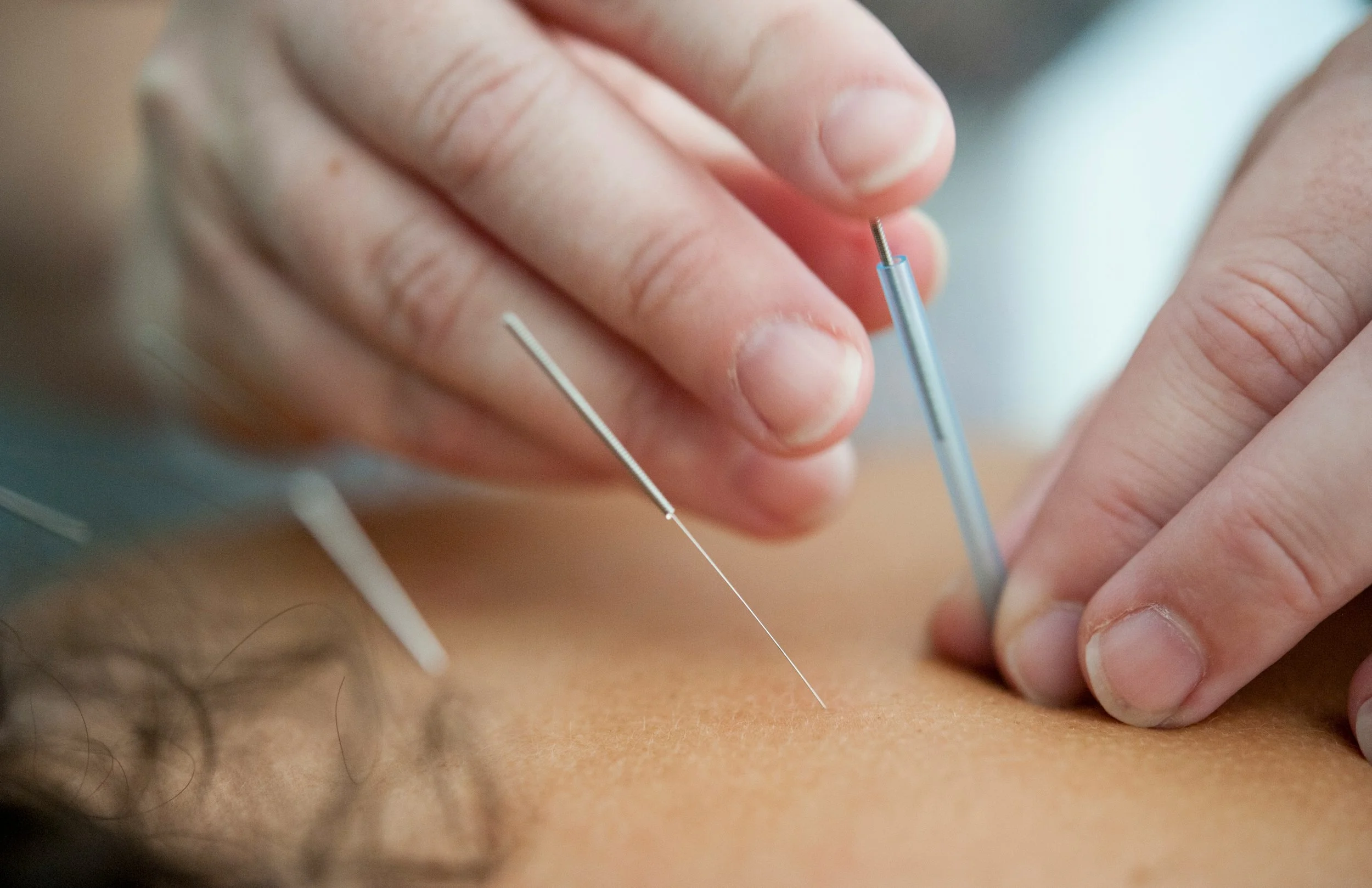
The first session runs 60 to 90 minutes. It covers a full history, tongue and pulse assessment, and questions about cycle length, flow, pain, skin, weight, sleep, digestion, and stress. Each of these points to which patterns are active.
For the first two to three cycles, treatment is weekly. Points and techniques shift between the follicular phase, ovulation window, luteal phase, and menstruation. Timing within the cycle matters more than hitting a fixed day.
After the first three cycles, most women move to every other week for maintenance. Some continue weekly if working toward conception or managing severe symptoms.
Food therapy recommendations are added alongside needling, specific to your pattern. For Phlegm-Damp presentations, this usually means reducing cold and raw foods, limiting refined carbohydrates, and adding warming spices. For Liver Qi stagnation, it means regular meals and reducing caffeine and alcohol. These are not generic "eat healthy" guidelines. They are mapped to the pattern being treated. For related support on weight and metabolic function, see the article on a natural approach to weight loss with acupuncture.
Timeline: What to Expect Cycle by Cycle
Women expecting a quick fix tend to leave disappointed. Women prepared to commit to three to six cycles tend to see the changes they were hoping for. If you are unsure how to judge early progress, the article on how to tell if acupuncture is working covers what realistic improvement looks like session by session.
Cycles 1 to 2: Sleep often improves first. Period pain reduces. PMS symptoms soften. Cycle length may or may not change yet.
Cycles 3 to 4: Cycle length starts to shorten toward a normal range for women whose cycles were long. Ovulation returns for some who were not ovulating. Skin and acne changes begin to show.
Cycles 5 to 6: Consistent cycle length. Clearer evidence of ovulation through cervical mucus changes, basal body temperature shifts, or confirmed bloodwork. Androgen symptoms continue to improve but often lag cycle changes.
If nothing has shifted by the third cycle, the pattern diagnosis is revisited. This is a common point where either the approach needs adjustment or herbal support should be added.
Acupuncture Alongside Metformin, Birth Control, and Fertility Treatment
Acupuncture works with these medications, not against them.
If you are on metformin: Acupuncture supports what metformin is doing. Many women report better tolerance of metformin, including fewer side effects like nausea or loose stool, after starting treatment.
If you are on birth control for symptom management: Birth control masks PCOS rather than treats it. If you plan to come off it in the next year or two to conceive, starting acupuncture several cycles before discontinuing helps the body's own rhythm return faster. If you plan to stay on birth control long-term, acupuncture still addresses symptoms birth control does not, including insulin sensitivity and androgen-driven skin and hair issues.
If you are doing IUI or IVF: Acupuncture is commonly used before and after embryo transfer. For PCOS specifically, acupuncture in the months before a cycle supports egg quality and uterine receptivity. Timing is coordinated with your fertility clinic. For a full breakdown of how fertility cases are approached, see the page on acupuncture for fertility.
Acupuncture is an adjunct, not a replacement for medical treatment. Coordination with your prescribing physician or fertility clinic is standard where relevant. If stress is a significant part of your presentation, the article on how acupuncture and TCM help with anxiety covers how the nervous system is addressed in parallel.
Who This Is For
Acupuncture for PCOS is a reasonable fit if you:
Can commit to a minimum of three cycles of weekly treatment
Want a complement to medical care, not a substitute
Are willing to make some dietary and lifestyle adjustments
Understand that PCOS is a lifelong condition that is managed, not cured
Who It May Not Be For
This is probably not the right fit if you:
Expect results in one or two sessions
Are unwilling to consider any food therapy or lifestyle changes
Have a severe eating disorder or untreated thyroid condition that needs medical attention first
Are looking to replace medical care entirely
Women who come in with matched expectations tend to do well. Those looking for a fast fix often stop treatment around week three, which is usually right before meaningful changes begin to show.
Deciding When to Start
If you are trying to conceive within the next six to twelve months, starting now makes sense. The body needs about three cycles to show meaningful change, and egg development itself takes about three months from the start of follicle recruitment. Six months of waiting is six months you do not get back.
If you are not trying to conceive but your cycles are absent for months at a time, starting treatment helps re-establish cycle regularity. Absent periods over long stretches carry their own risks, which your doctor can explain. For more on menstrual health specifically, see the article on how acupuncture can relieve menstrual cramps and support your cycle.
If symptoms are mild and manageable, there is less urgency. But PCOS tends to progress if left alone, particularly on the metabolic side. Insulin resistance does not improve without intervention.
What Patients Have Experienced
Results depend on the pattern, consistency of treatment, and contributing health factors. One documented outcome from a PCOS patient:
Condition - PCOS, diagnosed infertile by gynecologist
Before treatment - 4 years
Outcome - Conceived after 4 months of treatment
"4 years of PCOS, diagnosed with infertility by gynecologist, 4 months with Neil, just conceived."
— Melissa Lee
This outcome is not guaranteed for every patient. It reflects what is possible when the pattern is identified accurately and treatment is followed consistently.
How Neil Approaches PCOS Cases
PCOS treatment plans are run out of three locations across Greater Vancouver: Beyond Physiotherapy in South Surrey, BreakThru Kinetics in Surrey, and Beyond Physiotherapy in Langley. The first session is a full intake including tongue and pulse diagnosis. Follow-ups run 45 to 60 minutes. Acupuncture is combined with food therapy guidance and, where appropriate, cupping therapy for patients with pronounced stagnation patterns.
Neil has treated 7,000+ cases across Canada and China, with women's health and reproductive support forming a consistent part of that clinical workload. His background includes a Psychology degree from UBC alongside his TCM training at Kwantlen Polytechnic University, which informs how stress, sleep, and nervous system regulation are factored into PCOS assessment alongside physical markers. He teaches TCM at the Canadian College of Naturopathic Medicine and serves as Vice President of ATCMA. More on his background is on the About page.
For broader women's health conditions, visit the women's health acupuncture page. For patients dealing with both PCOS and fertility concerns, there is significant overlap with the acupuncture for fertility page.
Common Questions
Does acupuncture help PCOS if I am not trying to get pregnant?
Yes. Cycle regulation, insulin sensitivity, skin and hair improvement, weight management, and PMS symptoms all improve independent of fertility goals. Many patients come in for these reasons alone.
How soon will I see results?
Sleep and period pain often improve in the first one to two cycles. Cycle regularity typically takes three to six cycles. Androgen-driven symptoms like acne and hair changes usually take longest, often four to six months.
Is this covered by extended health insurance?
Most extended health plans in BC cover acupuncture performed by a Registered Acupuncturist. Receipts are provided for direct billing or reimbursement. Check your specific plan for per-visit and annual limits.
Can I do acupuncture while on metformin or birth control?
Yes. Acupuncture is safe alongside both. Many patients report improved tolerance of metformin after starting treatment. Coordinate with your prescribing physician if you have specific concerns.
Do I need to stop trying to conceive during treatment?
No. In most cases, continuing to try while treatment is underway is appropriate. The goal is to improve the conditions for conception, not to pause your efforts.
Book a PCOS Assessment
If you are managing PCOS and want to understand whether acupuncture is appropriate for your situation, the first step is an assessment.
It covers your specific pattern, relevant history, and a clear treatment plan matched to your presentation. Neil sees patients at clinics in Surrey, South Surrey, and Langley.
Question before booking? Message at (604) 721-7984. Responses within 2 hours.

Neil Dou, R.TCMP & R.Ac
Experienced & Trusted TCM Care
Registered Traditional Chinese Medicine Practitioner & Registered Acupuncturist in BC with extensive clinical experience in both China and Canada.
Serving Richmond, Surrey & Greater Vancouver
Provides personalized acupuncture treatments and home visits across Richmond, Surrey, and Burnaby, recognized for effective care and positive patient feedback.
Proven Results With a Holistic Approach
With over 7,000 successful treatments, care focuses on pain relief, internal medicine, and long term healing through a holistic approach that combines acupuncture, food therapy, cupping, gua sha, and lifestyle guidance.
