
Cupping Therapy Myths Explained: What’s Really Happening and What Isn’t
Neil Dou, R.TCMP, addresses these misunderstandings with patients across Richmond and Surrey every week, and this guide separates what cupping actually does from what social media claims it does.
Cupping therapy is often misunderstood. For some people, it’s the visible marks that raise questions. For others, it’s claims they’ve seen online about detoxing or toxins being “pulled out” of the body.
In clinical practice, many of the questions people ask about cupping are based on these misunderstandings rather than on what the therapy is actually intended to do. This article aims to clarify some of the most common myths and explain what is really happening during and after cupping therapy.
Why Cupping Therapy Is Often Misunderstood
Cupping therapy has become more visible in recent years, particularly through social media and televised sports. While this has increased interest, it has also led to simplified or exaggerated explanations of how cupping works.
When information is reduced to short clips or slogans, important context is often lost. As a result, people may come into treatment with expectations that don’t reflect how cupping is used in clinical practice.
What Does Cupping Therapy Actually Do?
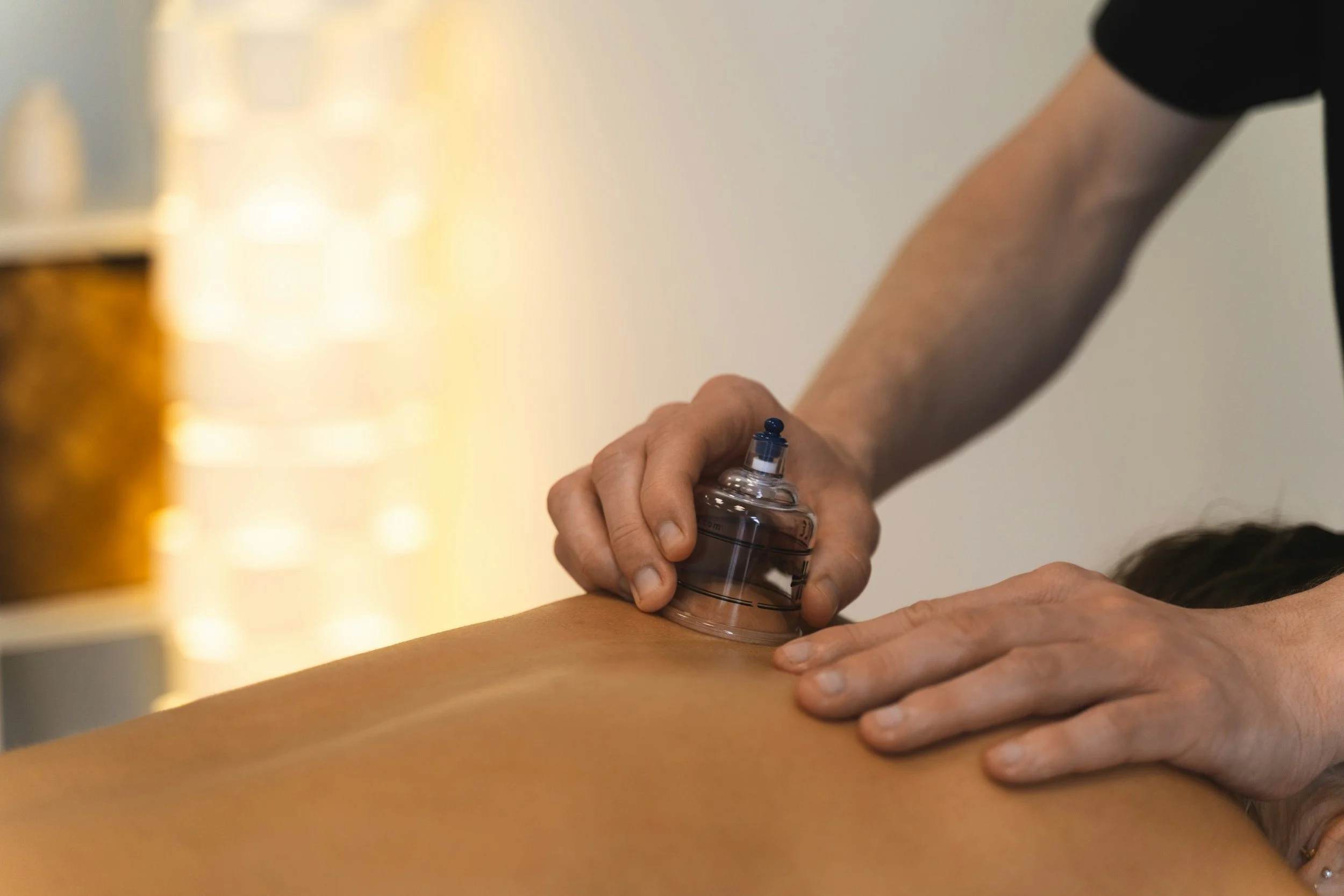
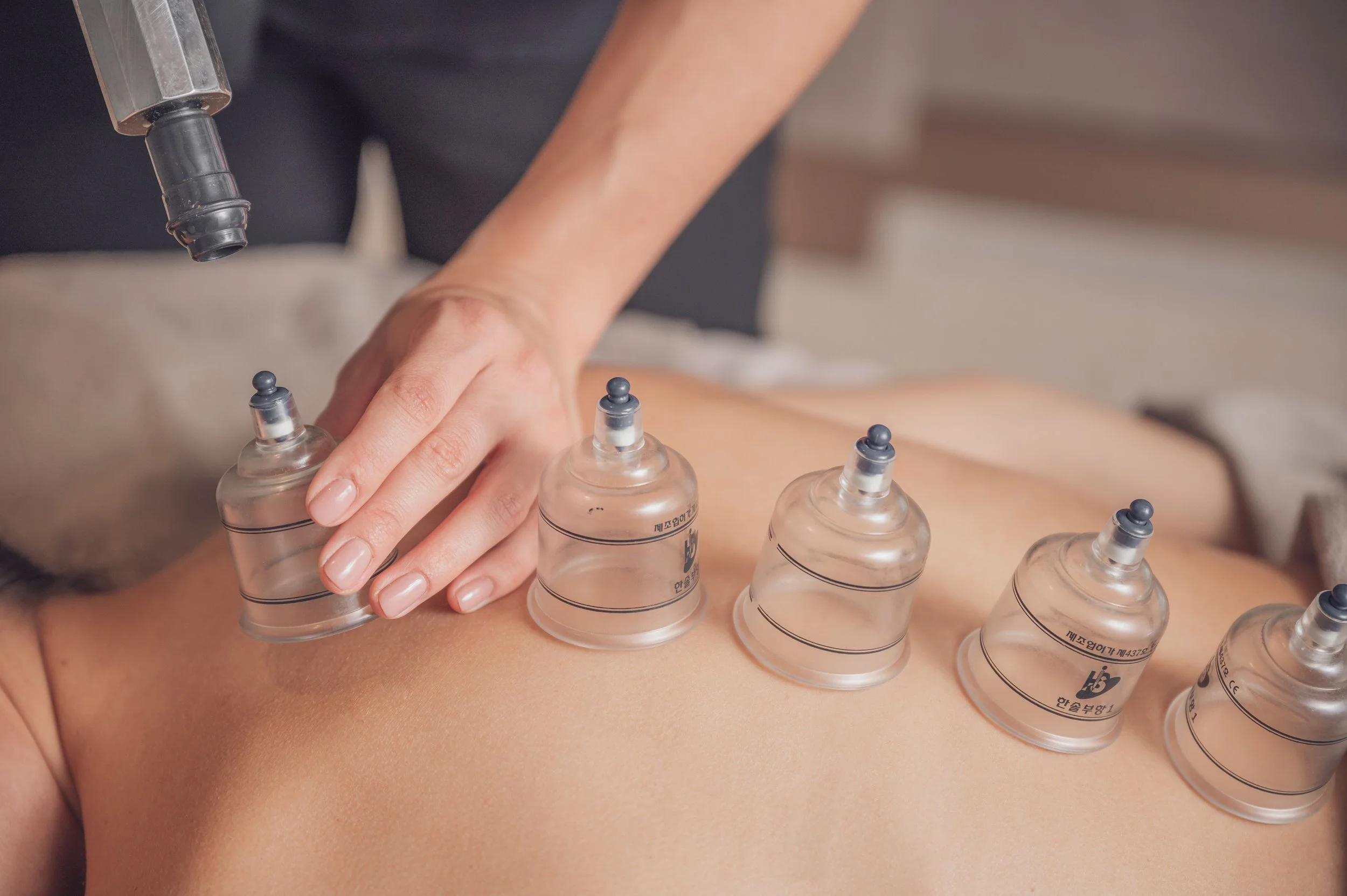
Cupping therapy is a technique that uses gentle suction to lift the skin and underlying tissue. The primary intention is to encourage movement in areas where circulation feels restricted or muscles are holding tension.
From a Traditional Chinese Medicine perspective, cupping is often used to address local stagnation areas where Qi and blood are not moving smoothly. Rather than working through specific acupuncture points, cupping acts more broadly on the tissues beneath the cup.
It is not designed as a detox method, nor is it intended to treat every condition. Instead, it is one tool among many that may be used as part of a broader treatment approach. For a more detailed overview of how cupping is used and what it may help with, you can read our article on
cupping therapy benefits and effects.
What Do People Mean When They Say “Something Comes Out” During Cupping?
What Comes Out During Cupping Therapy?
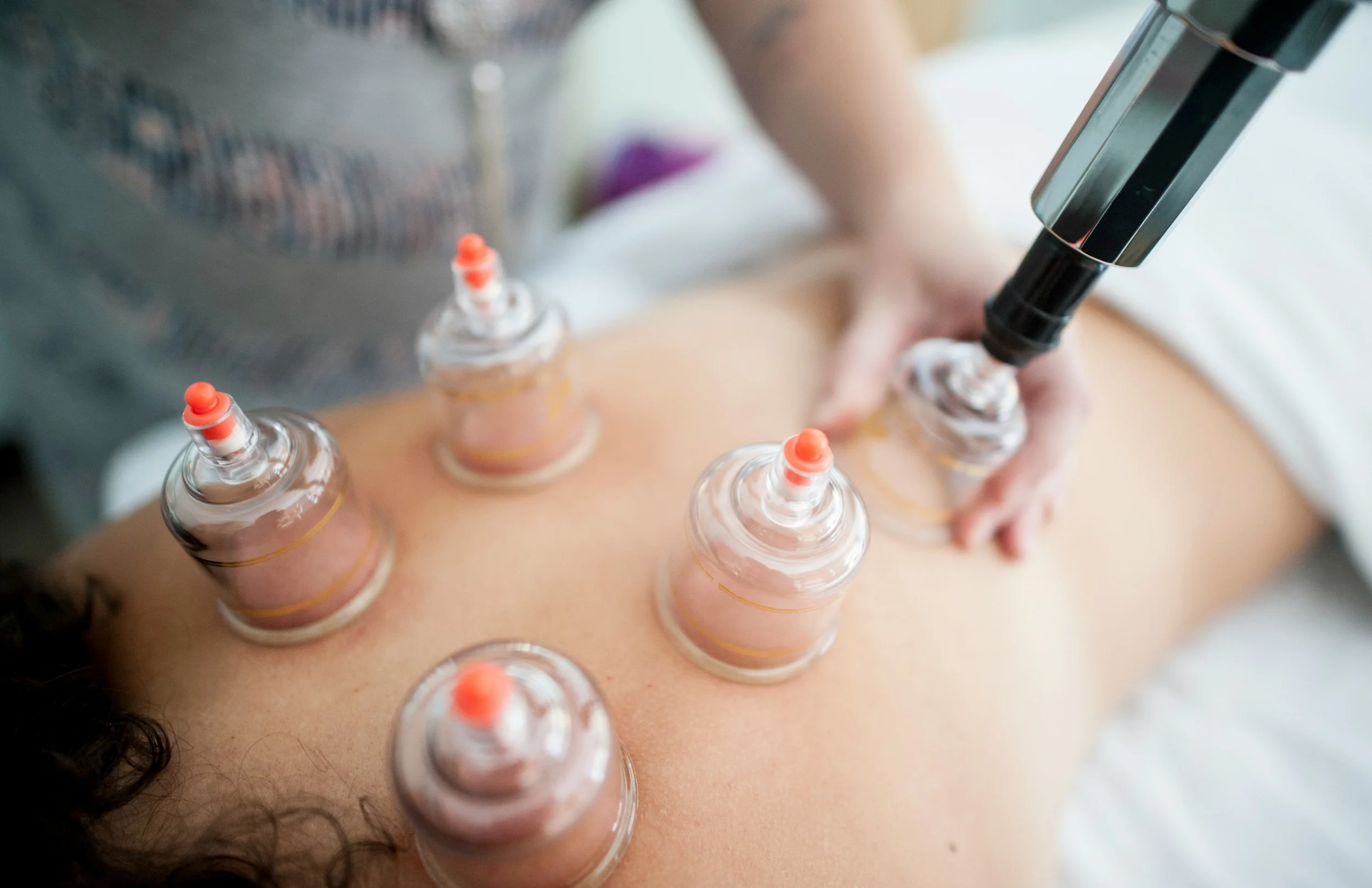
One of the most common myths is that cupping causes substances to leave the body. In dry cupping, nothing is released from the skin. The cups create suction, which draws blood toward the surface and changes local circulation, but the skin remains intact.
In some forms of wet cupping, a small amount of blood may be released. This is a specific technique and is different from standard dry cupping commonly used in clinical settings.
What Is the Red or Dark Colour Seen After Cupping?
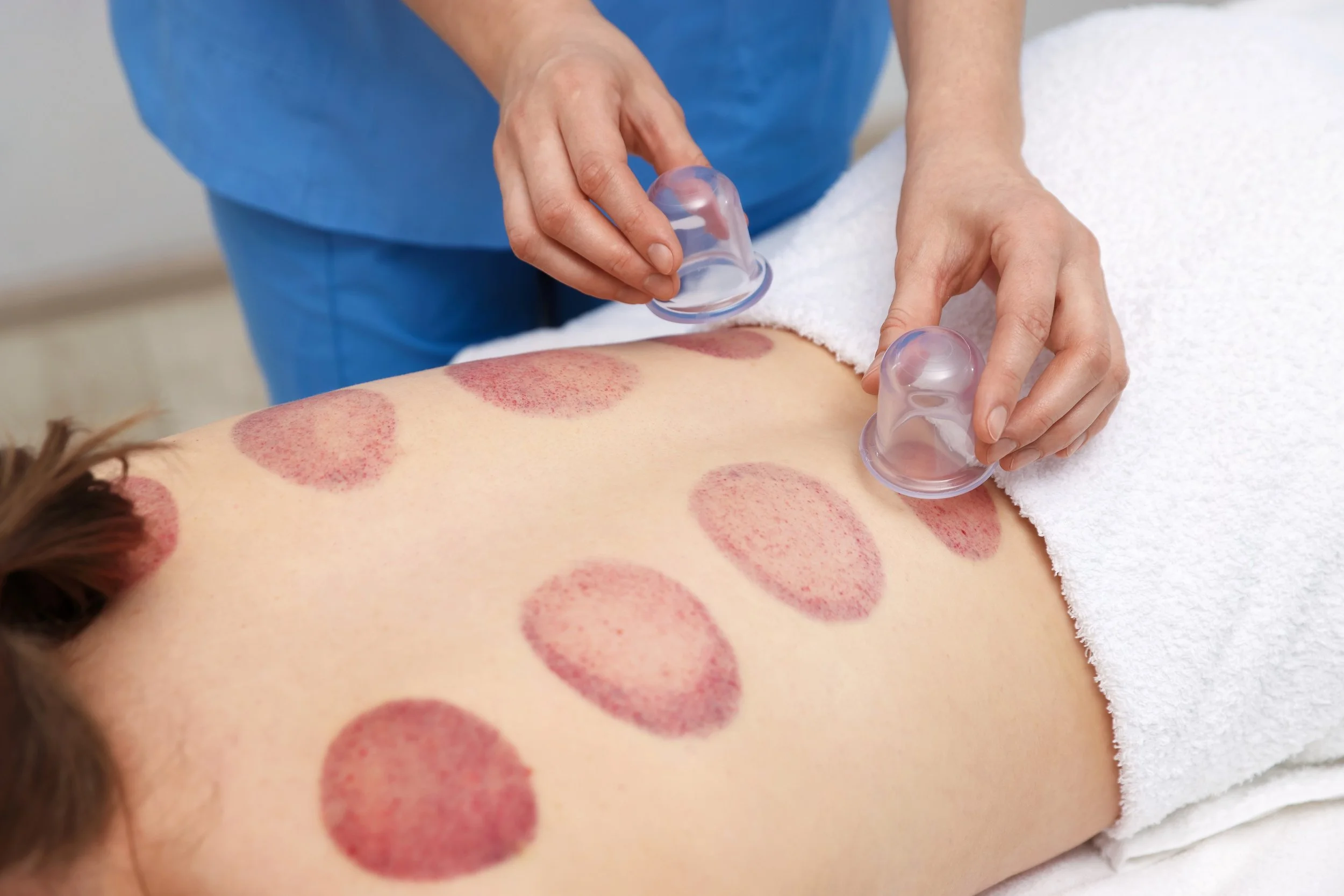
The red or darker colour seen after cupping is a response within the tissue. It reflects changes in circulation under the skin where the cup was applied. These marks are not bruises in the usual sense, and they are not a sign that substances have been removed from the body.
Does Cupping Remove Toxins From the Body?
Cupping therapy does not remove toxins from the body. Organs such as the liver and kidneys are responsible for processing and eliminating waste. The idea that cupping “pulls out toxins” is a simplified explanation that doesn’t accurately describe what is happening physiologically.
What cupping does influence is local circulation and tissue response, which some people associate with a sense of relief or lightness after treatment.
Why Are Cupping Marks Sometimes Dark?
What Do Cupping Marks Indicate?
Cupping marks vary in color from person to person and from one area of the body to another. Factors such as skin tone, tissue density, circulation, and the amount of suction used all play a role.
Darker marks often appear in areas where tissue is more restricted or where circulation has been limited. They are a reflection of how that area responds to the suction, not a measure of treatment success.
Do Darker Cupping Marks Mean the Treatment Worked Better?
No. Darker marks do not mean that a treatment was more effective. In fact, as tissues become less restricted over time, marks may appear lighter or fade more quickly. The goal of cupping is not to produce marks, but to support movement and ease within the tissue.
Can Cupping Help With Muscle Knots and Tightness?
How Cupping Affects Muscle Tension
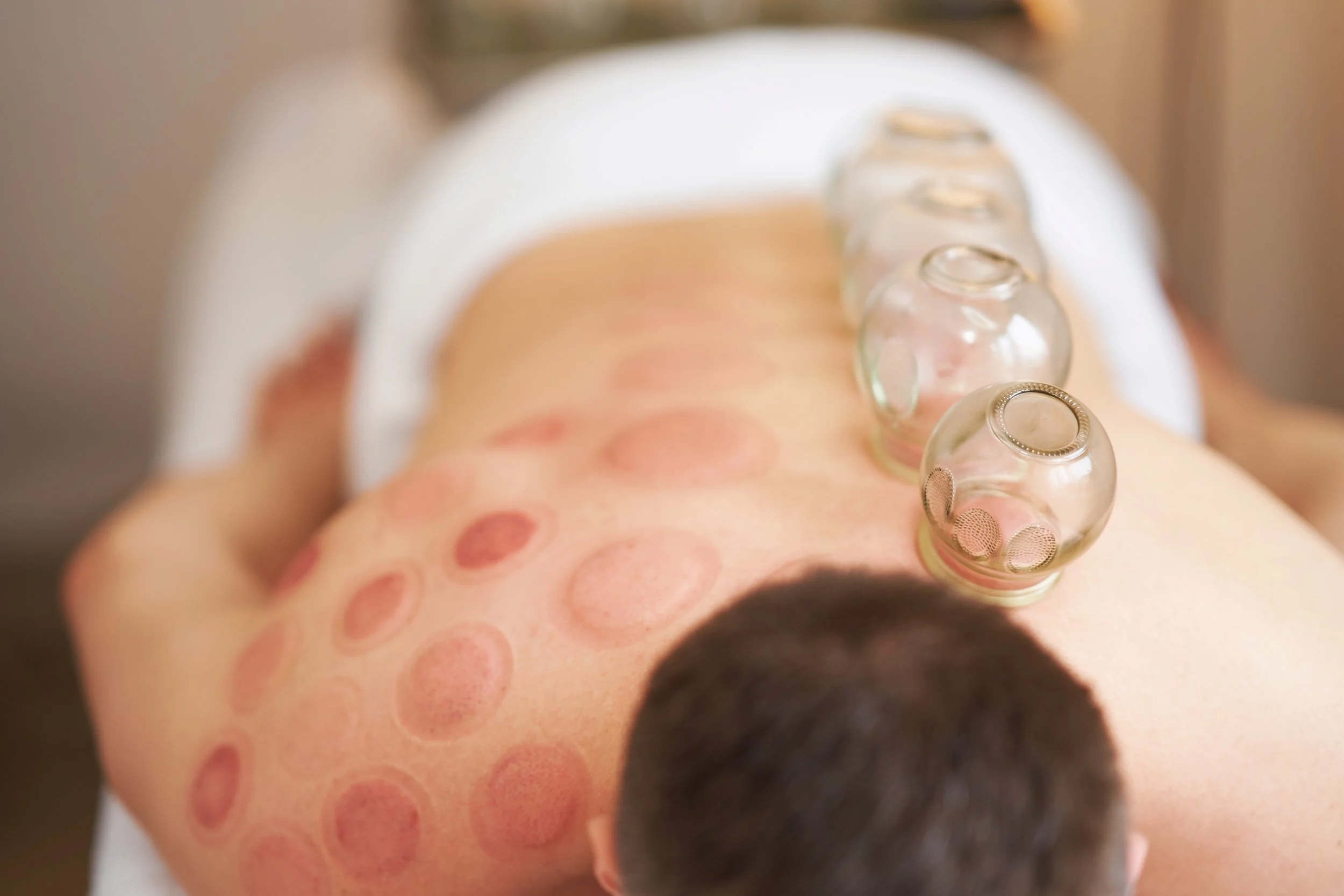
Cupping therapy is often used when muscles feel tight, heavy, or resistant to movement. The suction gently lifts the tissue, which can help reduce tension and encourage a sense of release.
In practice, cupping is commonly applied to areas such as the neck, shoulders, and back, where muscle tightness tends to accumulate.
Can Cupping Reduce Inflammation or Muscle Soreness?
Some people find that cupping helps reduce soreness or stiffness, particularly after physical strain or prolonged periods of sitting. Responses vary, and cupping is not a replacement for other forms of care when inflammation or pain has more complex causes.
More information about how cupping is applied within Traditional Chinese Medicine can be found on our page about cupping therapy in TCM.
How Do People Usually Feel After Cupping Therapy?
Common Sensations After Cupping
After cupping therapy, people may feel relaxed, lighter, or more mobile in the treated area. Some notice a temporary sense of warmth or mild soreness, similar to how muscles may feel after manual therapy.
Why Some People Feel Tired or Unwell After Cupping
Occasionally, people report feeling tired or slightly unwell after cupping. This can happen when the body is adjusting to changes in circulation or when overall stress levels are high.
One pattern that comes up in practice is when someone seeks cupping for back or shoulder discomfort, only to realise that ongoing stress is contributing to the tension. In those cases, treatment may shift to include other approaches, such as acupuncture, to better support the underlying pattern.
If symptoms feel unusual or persist, it is always appropriate to discuss them with your practitioner.
Is Cupping Therapy Actually Worth It?
When Cupping Therapy Is Most Useful
Cupping therapy tends to be most useful for localised muscle tension, stiffness, or areas that feel restricted. When used appropriately, it can be a helpful part of a broader treatment plan.
Why Opinions About Cupping Therapy Differ
Opinions about cupping vary because people respond differently, and because cupping is often discussed outside of its proper context. It is not a cure-all, and it is not intended to replace other treatments. Its value depends on when and how it is used.
Who should avoid cupping, or check with a practitioner first
Cupping is very safe when it is done by a trained, registered practitioner, and for most people the only after-effects are temporary marks and mild soreness. The one firm rule is that cupping is only ever applied to healthy, unbroken skin. Beyond that, a few situations call for caution or a quick check before booking.
Take extra care, or check first, if you:
Have a bleeding disorder, or take blood thinners or anticoagulant medication, since both make you more likely to bruise and mark heavily.
Have infected, broken, irritated, or sunburned skin over the area, or a skin condition that is currently flaring. Cupping is not applied over any of these.
Are pregnant. Cupping over the abdomen, lower back, and sacrum is avoided during pregnancy, so any treatment should be done by a practitioner who adjusts the approach; upper-body work is often still appropriate.
Have severe varicose veins or significant swelling in the area, which the cups are kept away from.
Have skin thinned by long-term steroid use, whether creams or tablets, since it marks and tears more easily.
Have a condition that needs medical clearance first, such as a history of blood clots, an uncontrolled heart condition, or active cancer over the area being treated.
The simplest safeguard is to tell your practitioner your full health history and any medications before your first session, so the approach can be adjusted or reconsidered where needed. If you are unsure whether cupping is suitable for you, a quick message before booking is the easiest way to check.
FAQ
-
Yes. For healthy adults, cupping by a trained practitioner is considered very safe. The usual after-effects are temporary round marks and mild tenderness. Risks are low, and they are lower still when you share your health history beforehand so the technique can be tailored to you.
-
Cupping should be avoided, or only done with care and guidance, by people with bleeding disorders, people on blood thinners, anyone with broken or infected skin over the area, and those with certain conditions that need medical clearance. Pregnancy calls for an adjusted approach rather than a flat no. When in doubt, check first.
-
The normal side effects are the round marks, which fade within 3 to 7 days, and mild soreness or tightness in the treated area. Some people feel briefly tired or lightheaded straight after a session. Anything beyond this, such as blistering, broken skin, or a mark that has not faded after about two weeks, is worth having checked.
Final Thoughts: Understanding Cupping Without the Myths
Cupping therapy is a practical technique with a specific role. Many of the myths surrounding it come from oversimplified explanations rather than from how it is used in clinical practice.
By understanding what cupping is and what it is not people can approach treatment with clearer expectations and make more informed decisions about their care.
If you’re curious about how Cupping can support your health, I welcome you to visit me at my clinic in Richmond. Together, we can explore natural, effective ways to help your body heal and restore balance.

Neil Dou, R.TCMP & R.Ac
Experienced & Trusted TCM Care
Registered Traditional Chinese Medicine Practitioner & Registered Acupuncturist in BC with extensive clinical experience in both China and Canada.
Serving Richmond, Surrey & Greater Vancouver
Provides personalized acupuncture treatments and home visits across Richmond, Surrey, and Burnaby, recognized for effective care and positive patient feedback.
Proven Results With a Holistic Approach
With over 7,000 successful treatments, care focuses on pain relief, internal medicine, and long term healing through a holistic approach that combines acupuncture, food therapy, cupping, gua sha, and lifestyle guidance.
