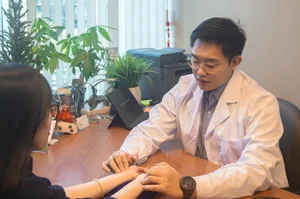
Acupuncture for Irregular Periods
Irregular periods respond well to acupuncture when the underlying driver is chronic stress or hypothalamic suppression, and less predictably when the cause is PCOS or thyroid dysfunction requiring medical management. Neil Dou, R.Ac, assesses cycle history and pattern before treatment, and most stress-related cases show cycle stabilization within two to three treatment cycles.
The word "irregular" covers a wide range. A 35-day cycle that runs consistently is regular. One that swings between 22 and 45 days is not.
These are not the same problem, and treating them as though they are is a mistake made in both conventional and alternative practice.
Women searching for acupuncture and herbal medicine for irregular periods in Surrey, Greater Vancouver, and the surrounding area typically arrive at one of three points: they have ruled out serious causes through testing, they carry a diagnosis and want integrative support, or they are early in the process and trying to understand their options. All three are legitimate starting points.
Get a Medical Assessment First if Any of These Apply
Investigation should come before TCM treatment in the following situations:
Your period has been late for three or more months and you have ruled out pregnancy
You are experiencing sudden, unexplained changes after years of regular cycles
Significant pelvic pain, unusual bleeding, or discharge is present alongside the irregularity
You have known or suspected PCOS, thyroid dysfunction, or endometriosis that has not been clinically assessed
You are over forty and noticing new cycle irregularity for the first time
None of these are contraindications to acupuncture. They are signals that blood work, imaging, or a gynecological examination should happen first. Acupuncture works best alongside a diagnostic picture, not ahead of one.

What Commonly Disrupts a Cycle
The most frequent patterns seen in practice are chronic stress, PCOS, thyroid dysfunction, perimenopause, postpartum hormonal shifts, and significant changes in body weight or exercise volume. More often than not, two or three of these are present at once.
Irregular versus absent periods. A cycle that arrives unpredictably is clinically distinct from one that has stopped entirely. Three or more months without a period, once you have ruled out pregnancy, meets the threshold for amenorrhea and warrants medical investigation before starting acupuncture.
Stress is the most underestimated driver. The hypothalamic-pituitary-ovarian (HPO) axis, which coordinates the hormonal signals that trigger ovulation, is highly sensitive to sustained cortisol elevation. Disrupted sleep, high output demands, and inadequate recovery are enough to delay or suppress ovulation in an otherwise structurally healthy cycle. This is the pattern that responds most predictably to acupuncture.
PCOS and thyroid dysfunction are different. Both involve measurable hormonal changes that require medical monitoring. Acupuncture can reduce symptom burden and support hormonal regulation alongside that care, but that is a different role than primary treatment.
How Acupuncture Addresses Irregular Cycles
A common question is whether acupuncture directly regulates hormones. The influence is indirect. Acupuncture acts through nervous system pathways that affect hypothalamic signaling, which in turn influences ovarian function and hormonal output. It does not supplement or replace hormones.
Acupuncture supports cycle regulation through three primary mechanisms, all connected to the HPO axis and the stress response.
Nervous system regulation. Reduced sympathetic nervous system activation directly influences hypothalamic output. Women with stress-driven cycle disruption, including those navigating high-demand careers, postpartum recovery, or significant life transitions, commonly see cycle length stabilize within two to three treatment cycles with consistent weekly sessions. That pattern is observable and repeatable in practice.
Prostaglandin and endorphin modulation. Acupuncture influences prostaglandin and beta-endorphin release, both of which affect uterine tone and luteal phase function. This is most relevant for cycles that are present but dysregulated, arriving unpredictably or with a very short or very long post-ovulatory window. The acupuncture for menstrual health article covers related mechanisms in detail.
TCM pattern identification. Pattern diagnosis identifies whether blood deficiency, qi stagnation, cold in the uterus, or kidney deficiency is the primary driver. Two women with identically timed irregular cycles can have completely different underlying patterns and respond to different points and protocols. This is why pattern-based assessment matters more than cycle timing alone.
What acupuncture does not do: resolve the structural cause in PCOS, correct thyroid hormone levels, or replace appropriate hormonal support for the perimenopausal transition.
What the Research Shows
The evidence for acupuncture in cycle regulation is strongest in three areas: stress-related hypothalamic suppression, PCOS-related irregularity, and dysmenorrhea. Acupuncture's influence on HPO axis signaling is reasonably well-established, though study design quality varies and effect sizes are more consistent for functional presentations than for structural hormonal conditions.
Stress-related irregularity responds most predictably. Structural conditions such as PCOS require a longer commitment and produce more variable outcomes. This is not a reason to avoid treatment. It is a reason to enter it with realistic expectations.
Before starting a your TCM journey.We recommend reading about how to tell if acupuncture is working so that progress markers are clear from the outset.

Treatment Timeline and What Changes First
Three to four full cycles is a realistic minimum for women with stress-related irregularity. PCOS and perimenopausal presentations typically need longer.
Early signs that treatment is working appear before the cycle normalizes. Sleep quality usually improves first. Premenstrual symptoms, including breast tenderness, mood changes, and bloating, tend to reduce in intensity. Ovulation timing becomes more predictable. These are meaningful early signals and worth tracking.
If nothing has shifted meaningfully by the end of the second cycle, the pattern diagnosis is revisited. Continuing the same approach without measurable change is not the standard.
If you are unsure whether your cycle irregularity is stress-related, hormonal, or something that warrants medical investigation first, a TCM assessment can usually clarify which category applies and whether acupuncture is likely to be useful. Book a consultation.
Who This Approach Is and Is Not For
Most relevant for:
Women with stress-related or functionally disrupted cycles with no identified structural cause
Women managing PCOS, thyroid conditions, or perimenopause who want integrative support alongside conventional treatment
Postpartum women working to restore cycle regularity
Women tracking cycles for fertility support who want to address irregularity before trying to conceive
Less likely to be the right starting point for:
Women with untreated thyroid disease, hyperprolactinemia, or structural gynecological conditions that require medical management before TCM
Women who have not yet had a medical assessment and whose irregularity is new or severe
Women expecting acupuncture to resolve a condition that requires ongoing medical management
Women unable to commit to a minimum of three to four cycles of consistent treatment
FAQ
-
Yes, in the right clinical context. Acupuncture is most effective for stress-related and functionally disrupted cycles. It is less predictable for irregularity rooted in structural hormonal conditions such as PCOS or thyroid disease, though it can still reduce symptom burden when used alongside appropriate medical management.
-
Acupuncture can reduce some of the hormonal and stress-related factors that worsen cycle irregularity in PCOS. The condition itself is not reversed. Working alongside medical management is where acupuncture is most effective. Some women with PCOS see meaningful improvement in cycle regularity and premenstrual symptom burden with consistent treatment over several months.
-
Most women notice early improvements, including better sleep and reduced premenstrual symptoms, within four to six sessions. Full cycle normalization typically takes three to four cycles. More complex presentations need longer. Neil discusses realistic timelines at the initial assessment.
-
Herbal medicine is used within TCM alongside acupuncture for cycle regulation, with formula selection based on pattern diagnosis rather than cycle timing alone. Neil's practice focuses on acupuncture and related modalities. Neil can address whether herbal medicine is appropriate for a specific presentation during your assessment.
-
No. TCM assessment accounts for current medications. Disclose everything at intake so the approach can be calibrated appropriately.
-
Irregular cycles make conception timing difficult. Addressing cycle regularity is a common first step for women preparing to conceive. The acupuncture for fertility article covers how these two goals connect in practice.

How Neil Approaches Irregular Cycle Cases
Neil Dou is a Registered Acupuncturist (R.Ac) with the College of Complementary Health Professionals of BC (CCHPBC). His training includes the four-year acupuncture program at Kwantlen Polytechnic University in Richmond and a Bachelor's degree in Psychology from UBC. Over 7,000 cases across China and Canada underpin his clinical focus in women's health, including menstrual irregularity, PCOS, and acupuncture for fertility support.
Neil teaches TCM at the Canadian College of Naturopathic Medicine and serves as Vice President of the British Columbia Association of Traditional Chinese Medicine and Acupuncture Practitioners (ATCMA).
Irregular period cases begin with a full assessment: cycle history, symptom picture, relevant health background, and any existing medical investigation. The goal of that first session is a clear pattern diagnosis and a realistic picture of what treatment can and cannot address. Most women leave with more clarity than they arrived with.
Book a TCM Assessment in Surrey or Greater Vancouver
If your cycles are irregular and you want to understand what is driving them, a TCM assessment is a reasonable next step, alongside or following a conventional medical check.
Neil practices at three clinic locations across Surrey, South Surrey, and Langley. Book through the contact page or review the full range of women's health acupuncture services.
To book by SMS: (604) 721-7984.

Neil Dou, R.TCMP & R.Ac
Experienced & Trusted TCM Care
Registered Traditional Chinese Medicine Practitioner & Registered Acupuncturist in BC with extensive clinical experience in both China and Canada.
Serving Richmond, Surrey & Greater Vancouver
Provides personalized acupuncture treatments and home visits across Richmond, Surrey, and Burnaby, recognized for effective care and positive patient feedback.
Proven Results With a Holistic Approach
With over 7,000 successful treatments, care focuses on pain relief, internal medicine, and long term healing through a holistic approach that combines acupuncture, food therapy, cupping, gua sha, and lifestyle guidance.